The Principles of Government
Federalism: how power is shared between the nation and the states.
Delegated Powers
Delegated powers are the powers of the National Government. There are three kinds. Click a card to see what it means.
Expressed Powers
Implied Powers
Inherent Powers
Two more you'll need for the Power Wheel:
Reserved Powers
Concurrent Powers
Name that Power
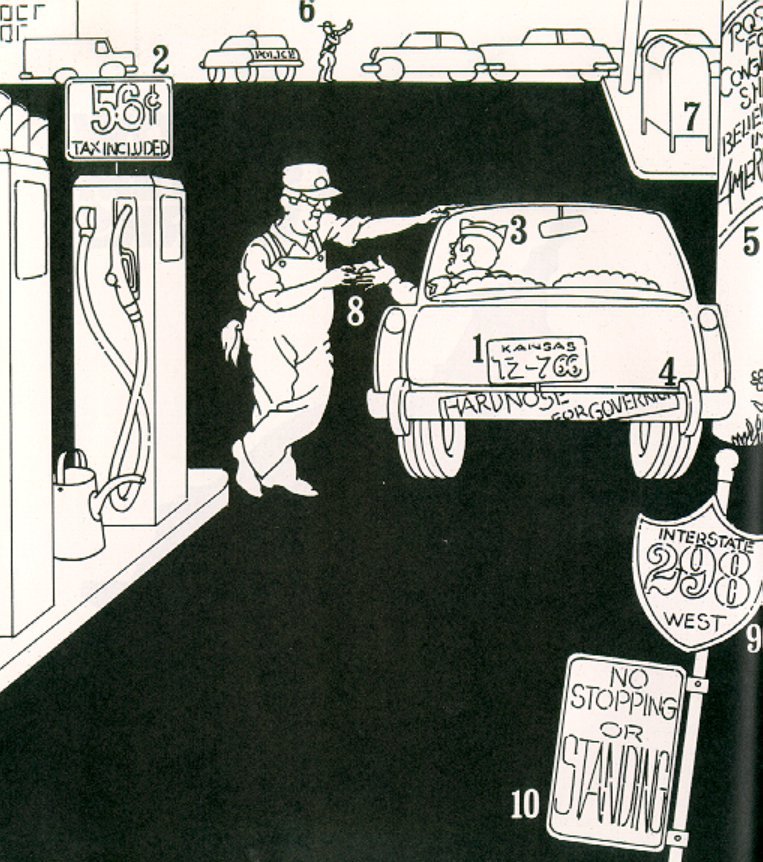
Everything in this picture is controlled by government power. For each number, pick the power. Point at a number to see it light up in the picture. Stuck? Open the Cheat Sheet.
The Power Wheel
Spin the wheel. It lands on a power. Then decide: is it Expressed, Implied, Inherent, Reserved, or Concurrent?
Evolving Federalism
Political scientists use cakes to describe how the National and State Governments share power.
Dual Federalism
Each level has its own separate jobs, like two layers that don't mix. The National Government and the states stay in their own areas.
Cooperative Federalism
The levels cooperate on some policies and their jobs swirl together. Political scientist Morton Grodzins called it “marble-cake federalism.” It has grown since the New Deal, often through federal grants that encourage, rather than command, the states.
States Working Together
The Northwest Ordinance
The Township
The Land Ordinance of 1785 divided western land into townships, 6 miles square. Each township held 36 sections of 1 square mile, or 640 acres.
Section 16 was set aside to support public schools.
The Northwest Ordinance, 1787
- Set up a government for the Northwest Territory.
- When a territory had 60,000 free inhabitants, it could ask to become a state, equal to the original states.
- Banned slavery in the territory and encouraged schools.
- Five states came from it: Ohio, Indiana, Illinois, Michigan and Wisconsin (plus part of Minnesota).
Steps to Become a State
Build the staircase to statehood, one step at a time. Click Next Step.
The Cabinet
Match each Cabinet member to the department's job. Click a name, then click the box beside the job (or drag the name onto it).
The Password Lightning Round