

Next
Next


Geography

Geography
Geography
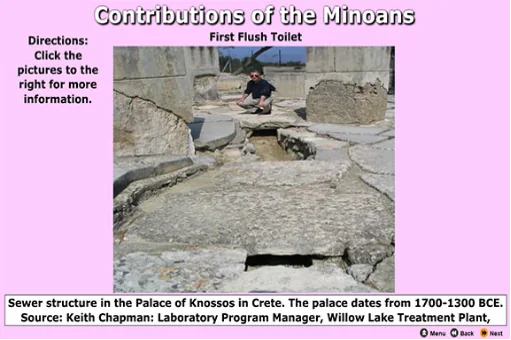
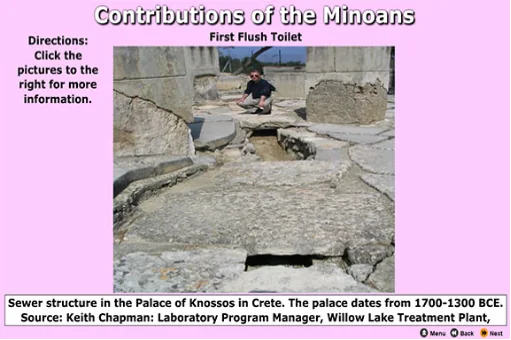
Flush Toilet
Flush Toilet
Flush Toilet
Arthur Evans
Arthur Evans
Arthur Evans
Snake Goddess
Snake Goddess
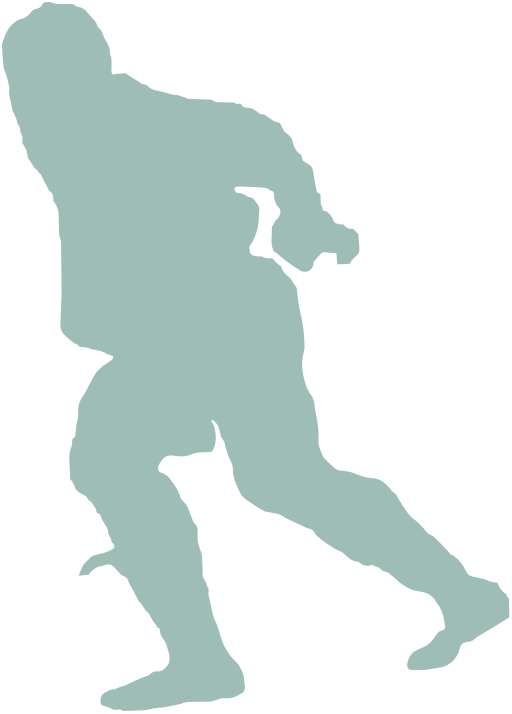
Rodeo Bull-Leaping
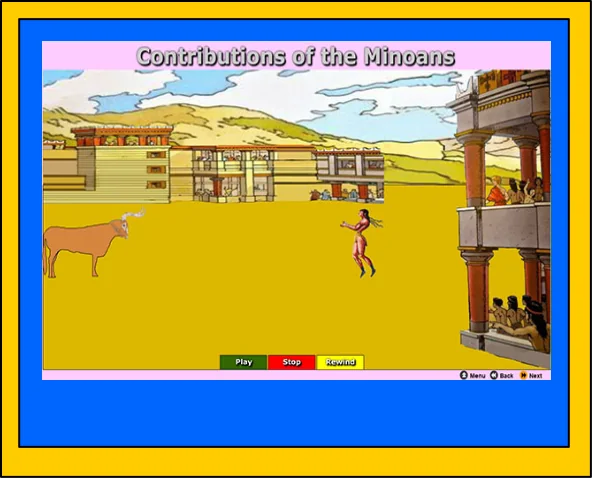
Rodeo Bull-Leaping
Rodeo Bull-Leaping
Theseus Story

Theseus Story
Minotaur Story
Minotaur Story
Titian Painting
Titian Painting
Maze Puzzle

Maze Puzzle
The End
The End
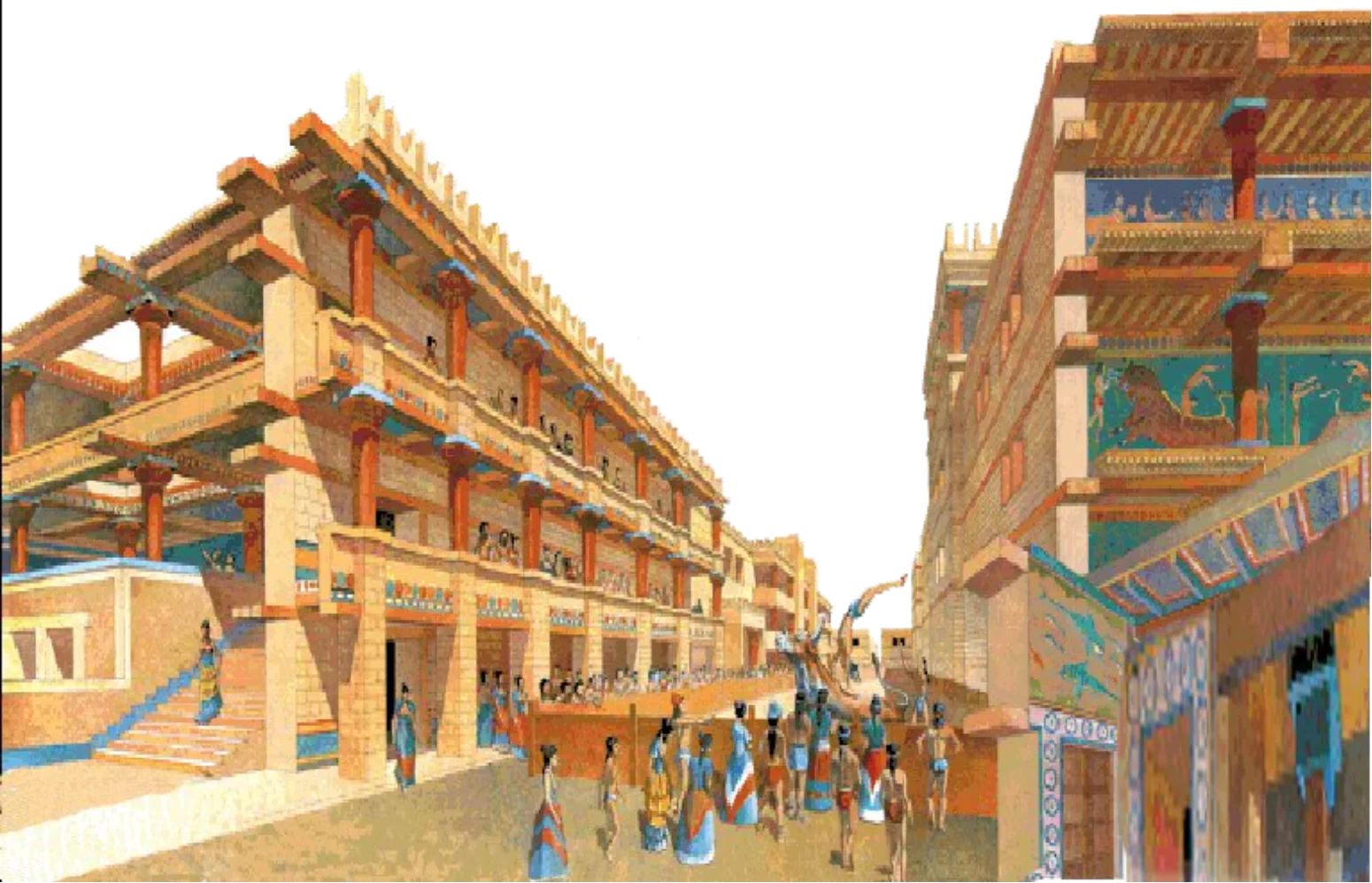
Palace Layout
Palace Layout
Knossos Palace
Next
Next


Back
Back


Menu
Menu



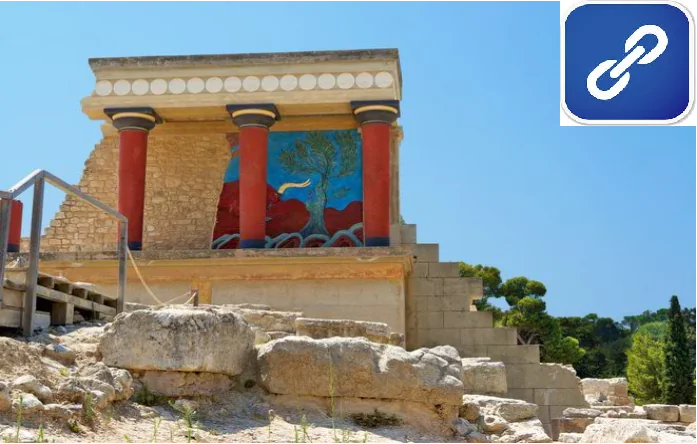
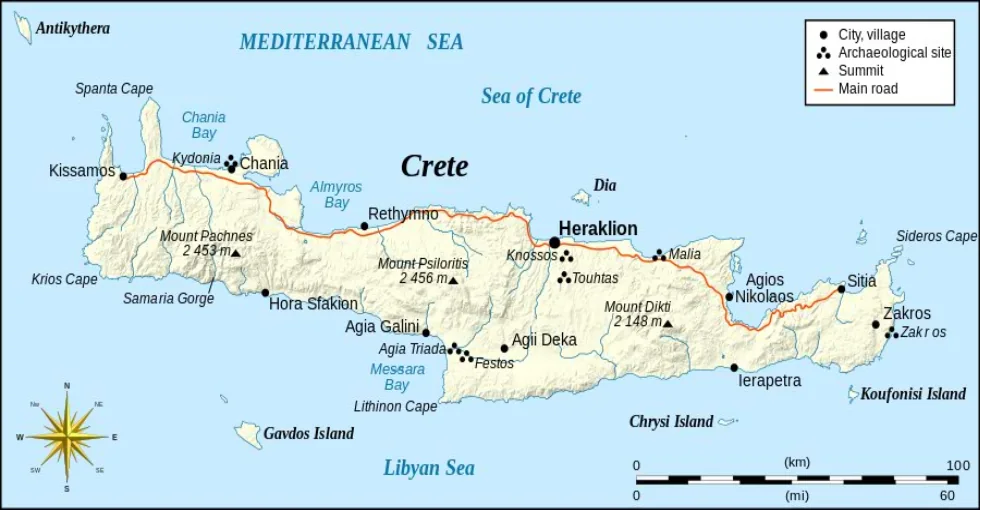
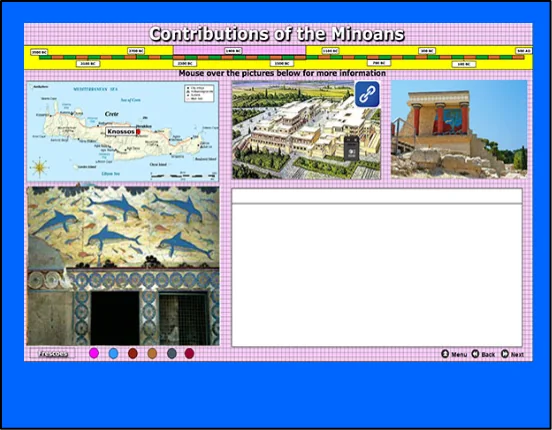
Knossos
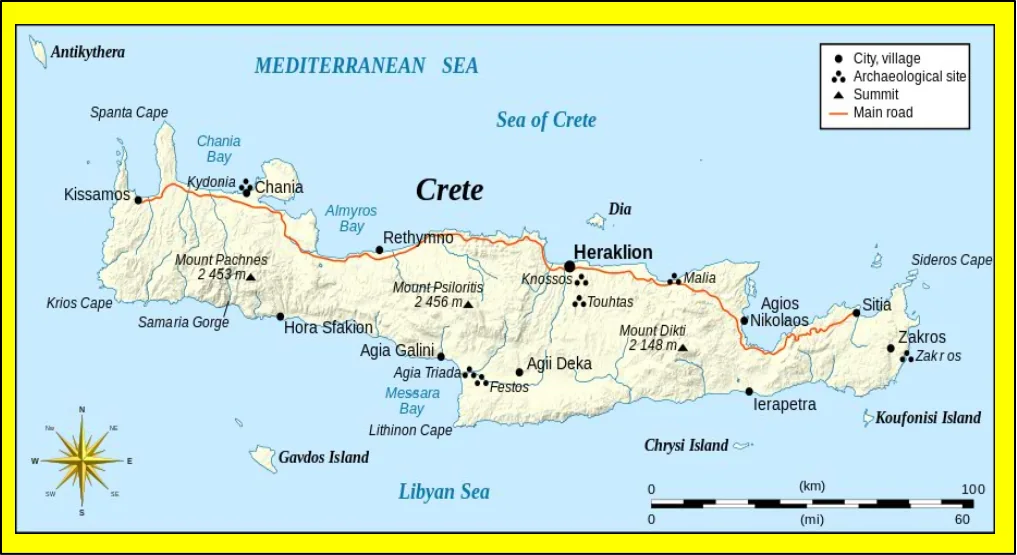

Knossos
Knossos
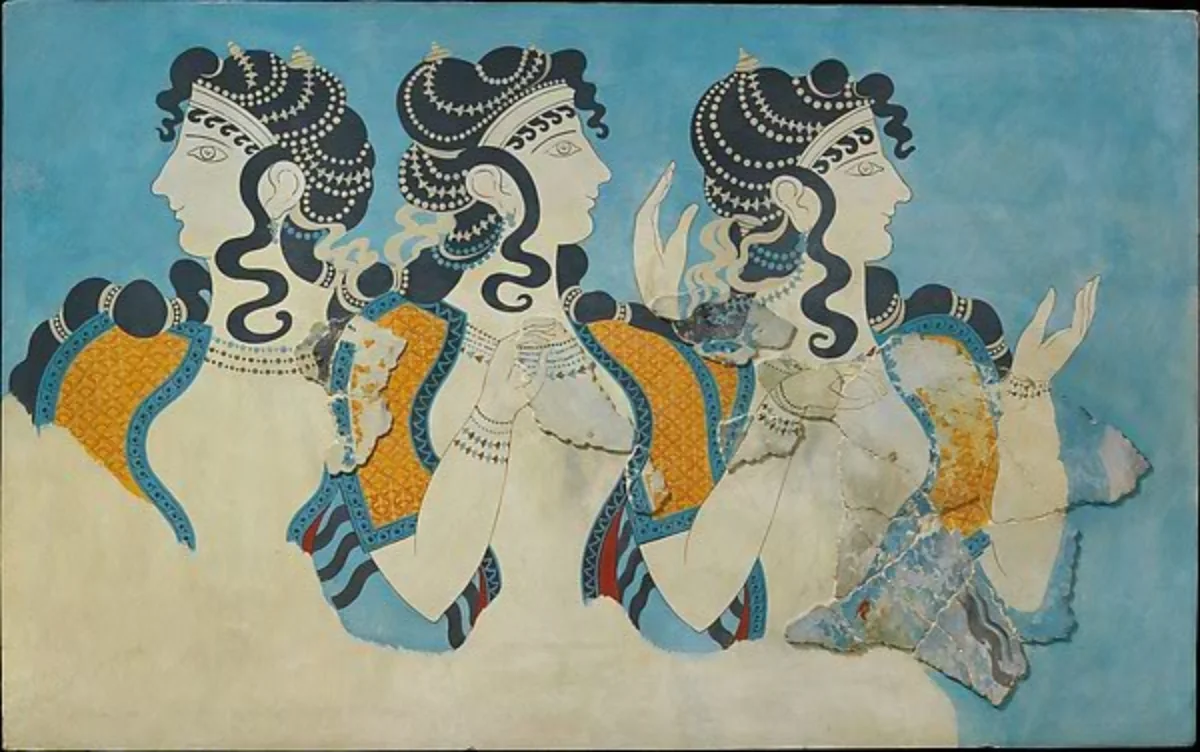
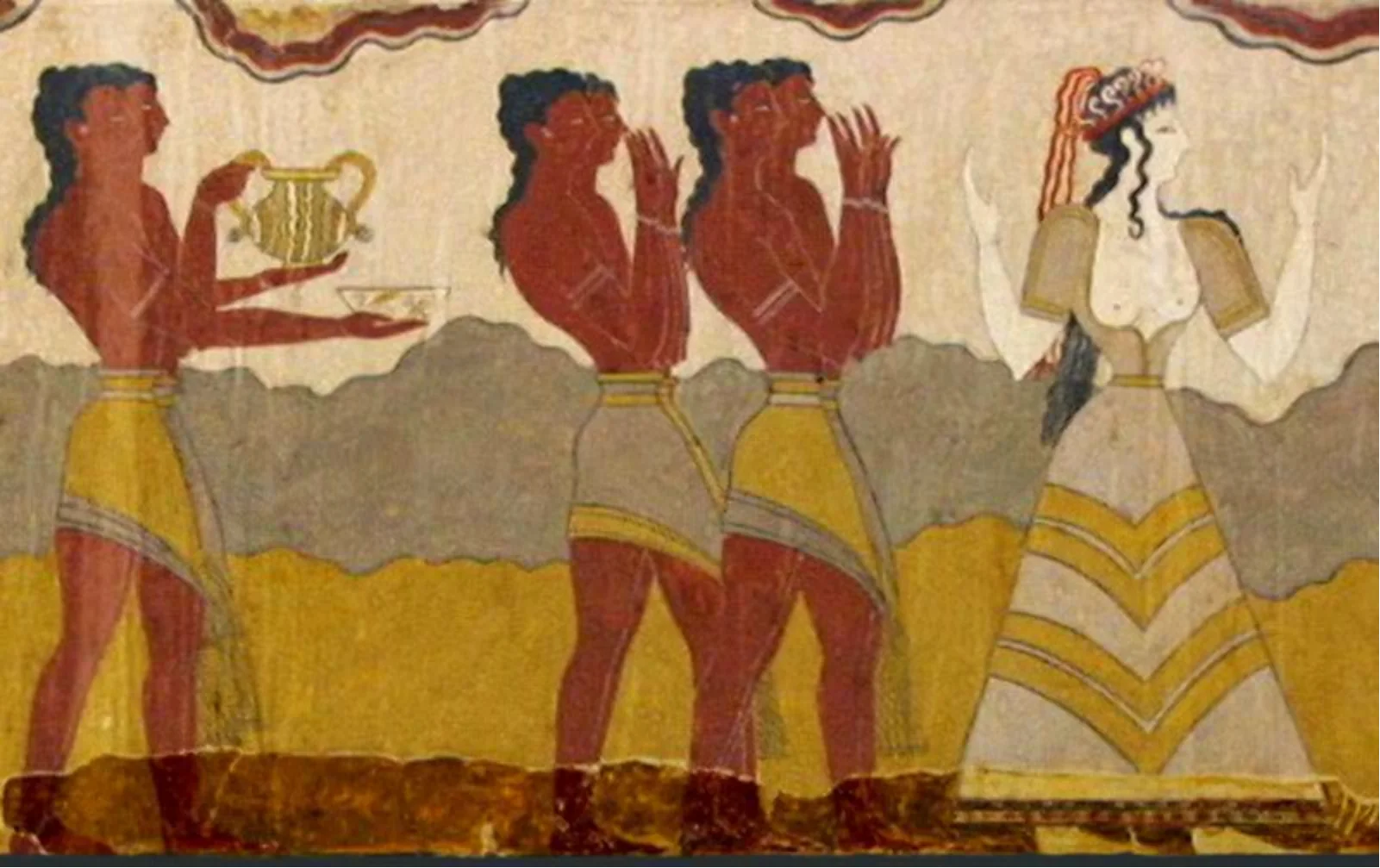
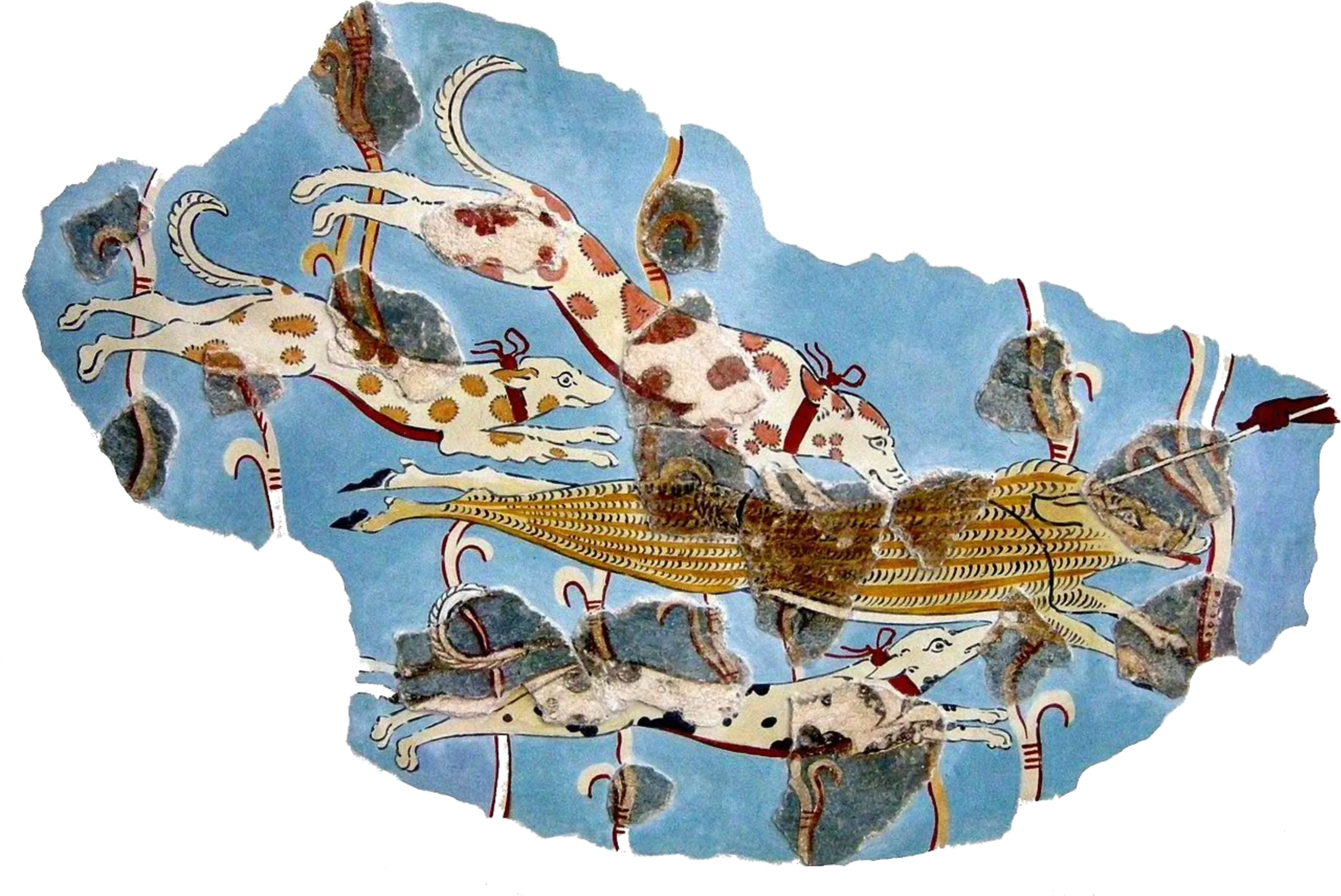
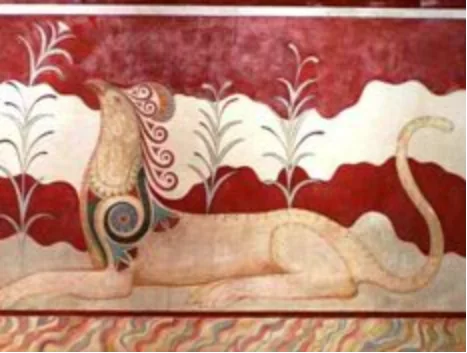
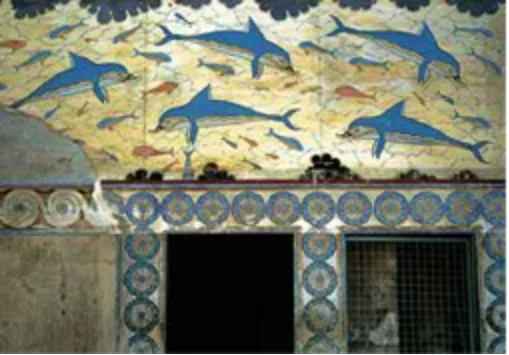
Frescoes





Next
Next
Back
Back
Menu
Menu

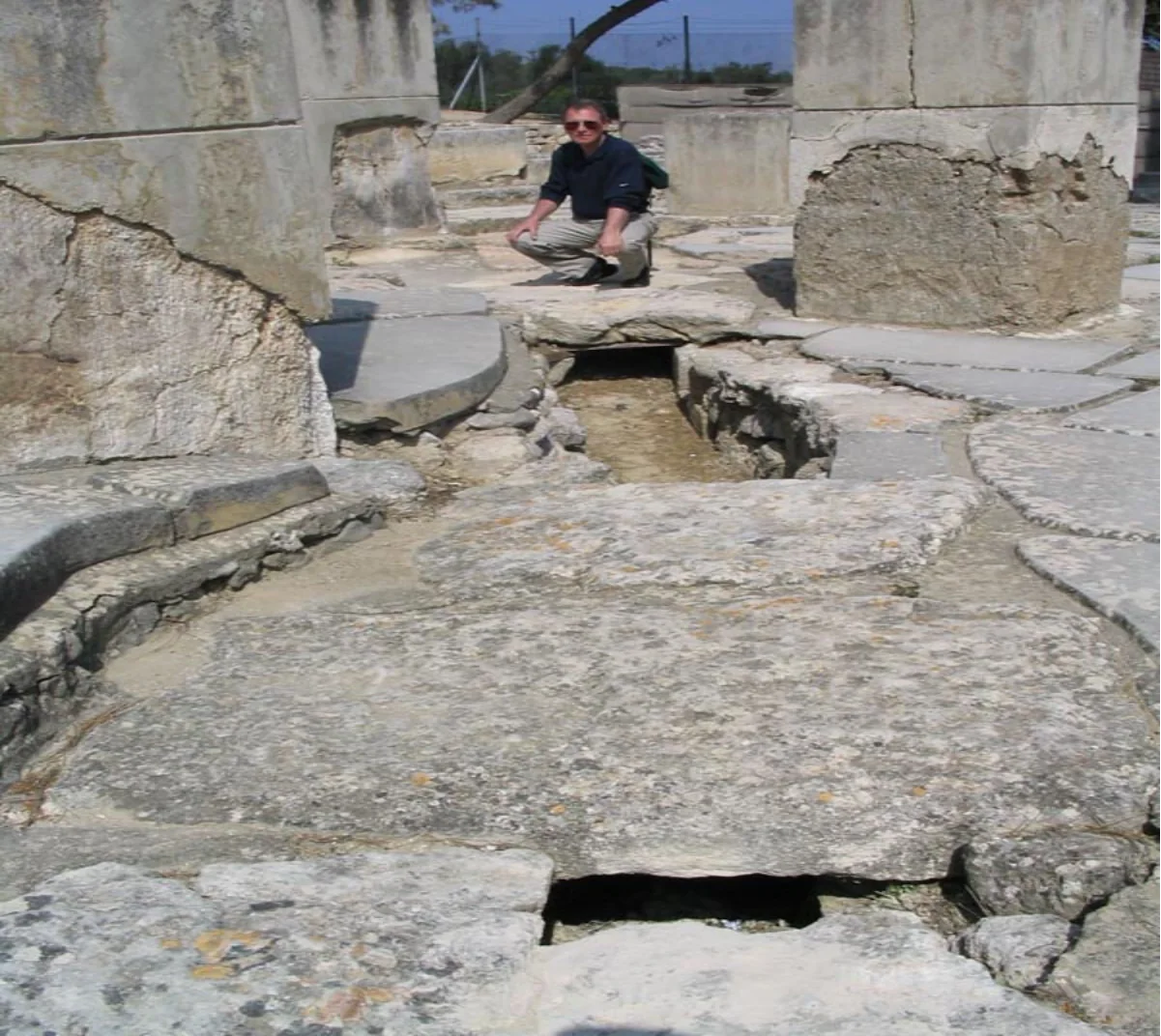
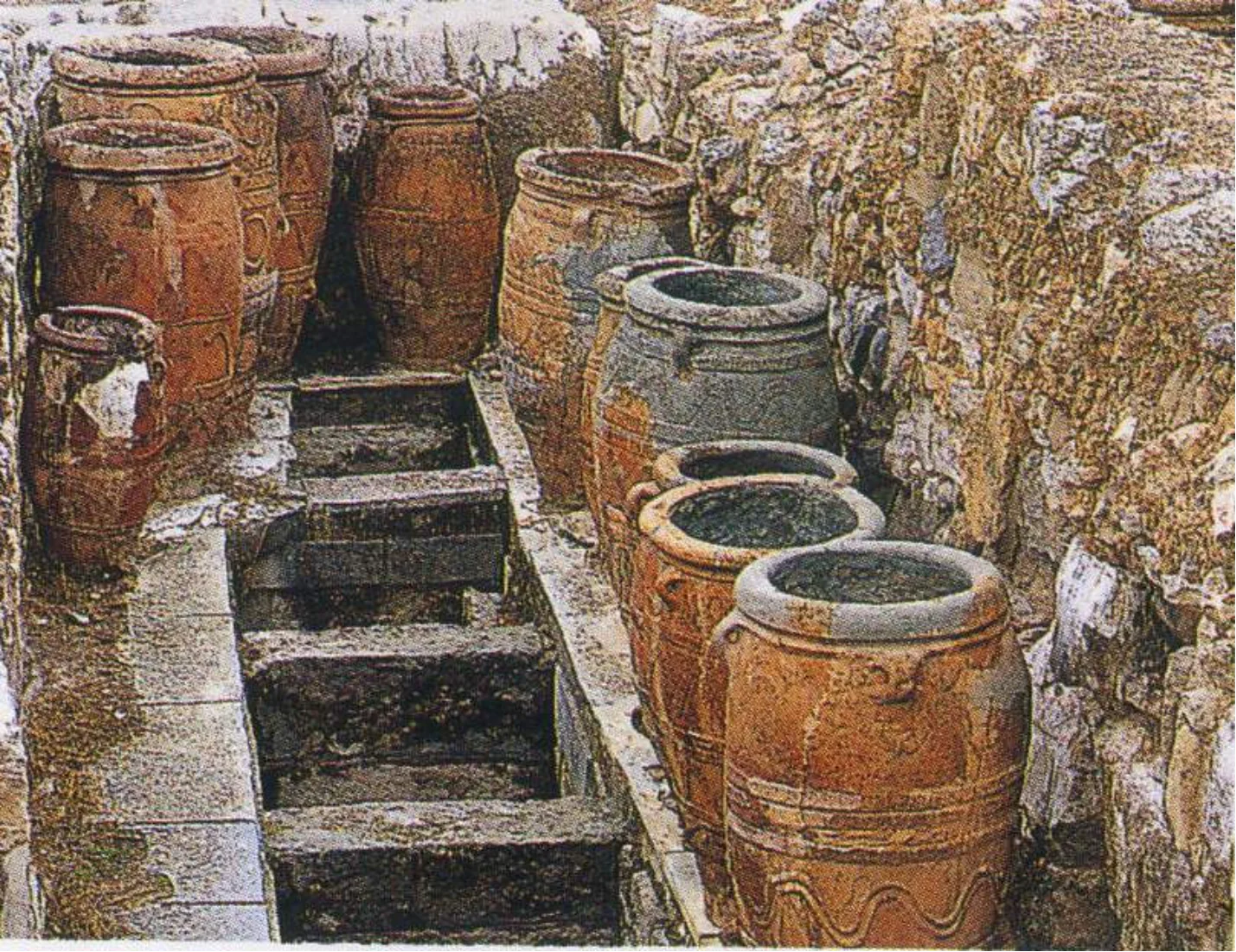
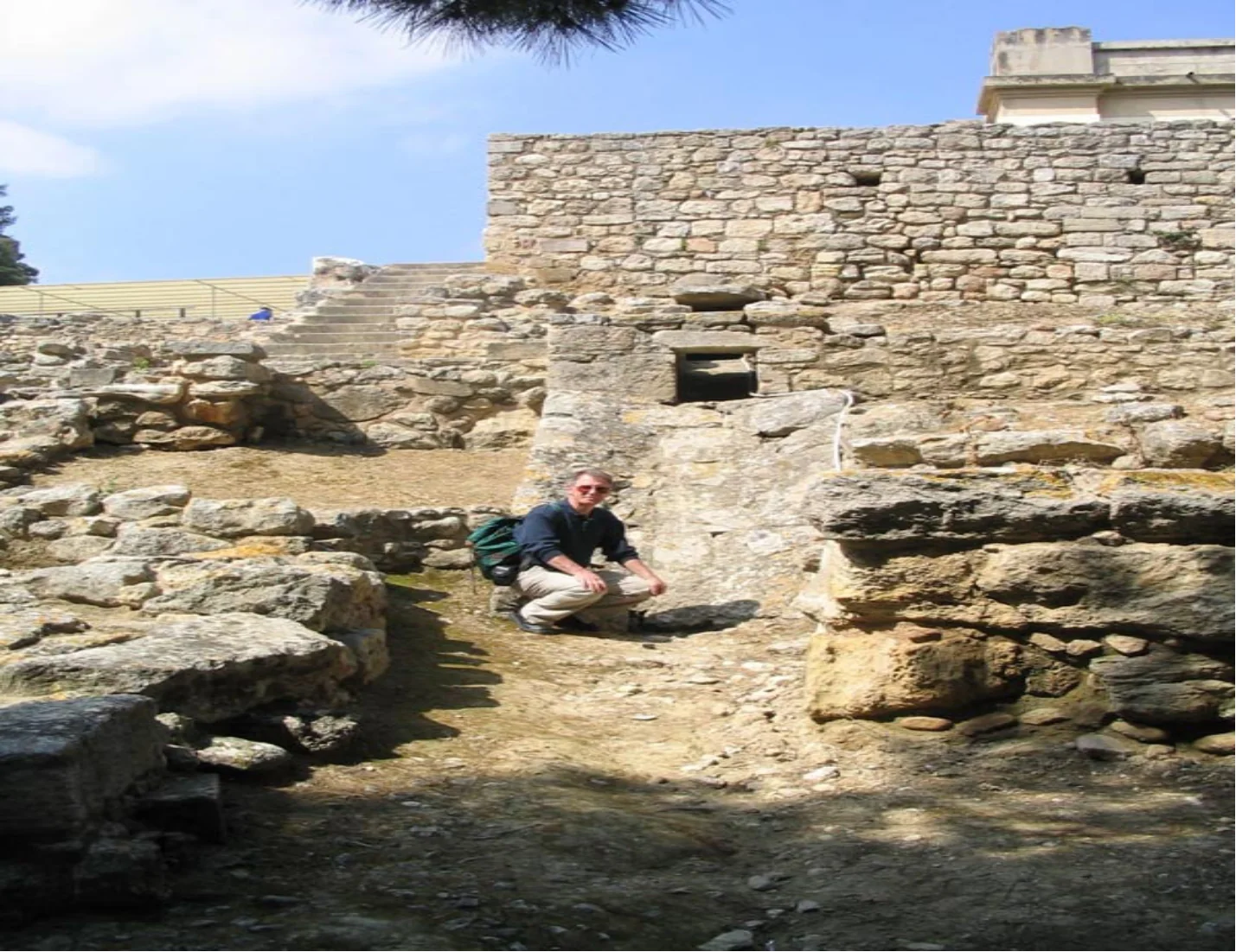
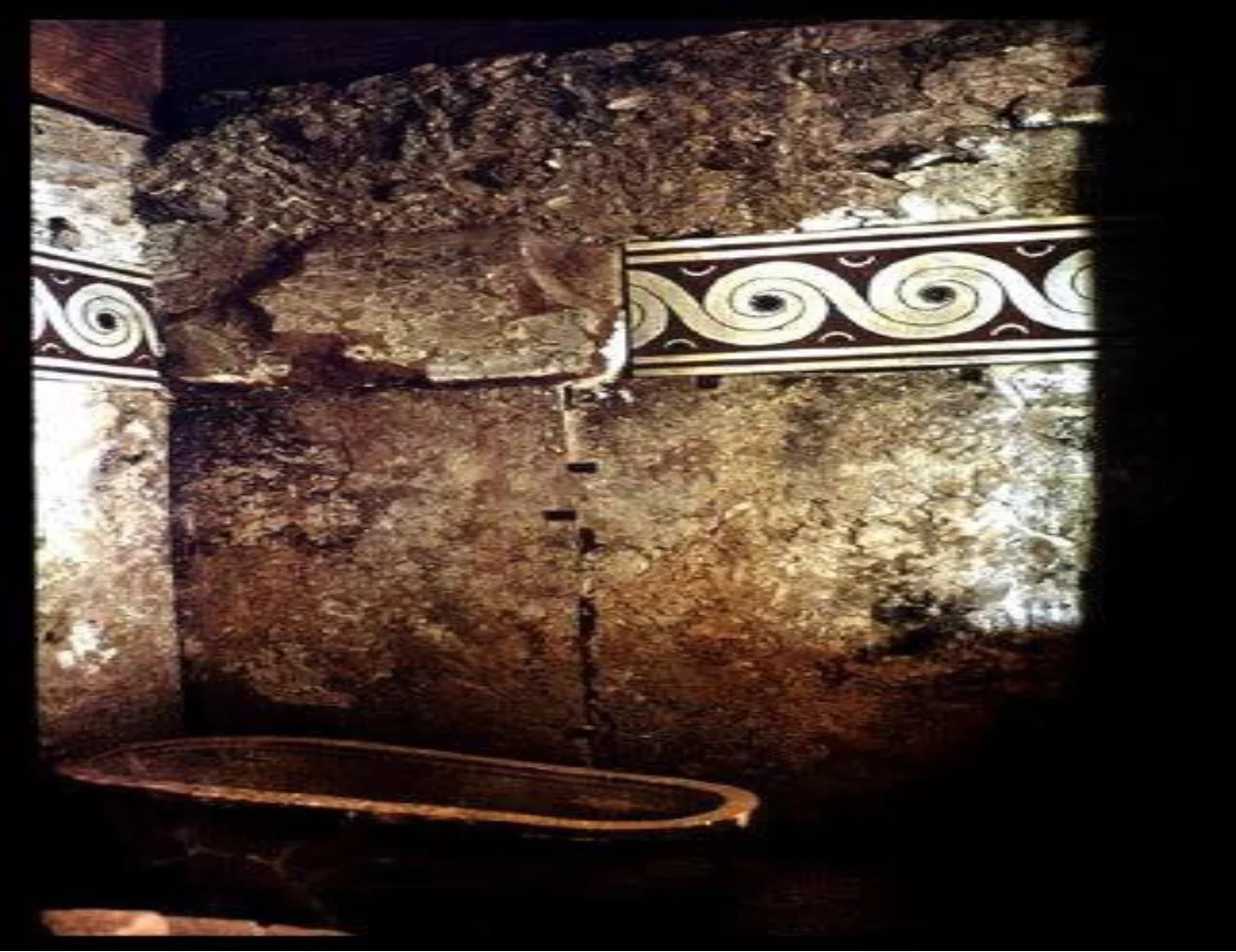
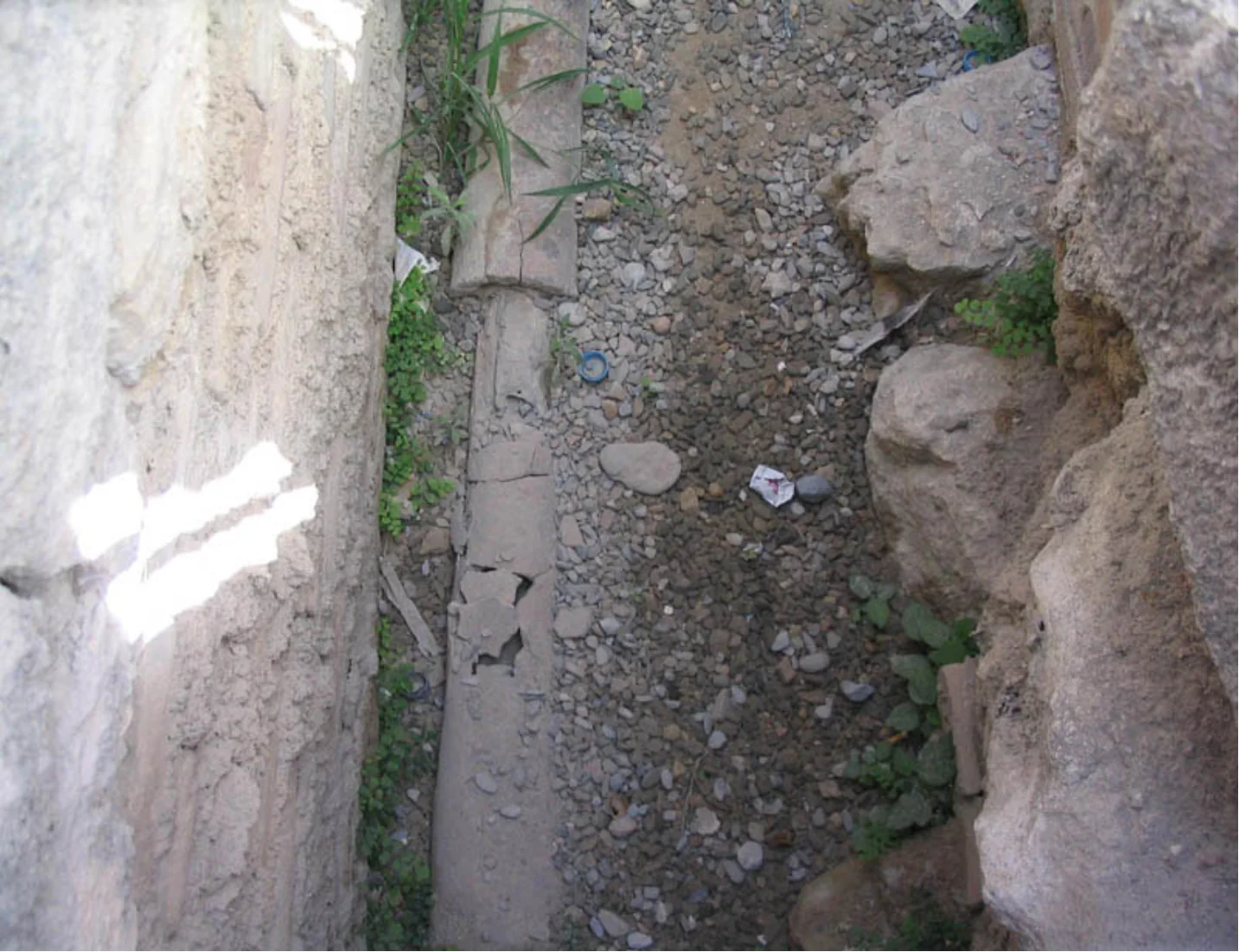
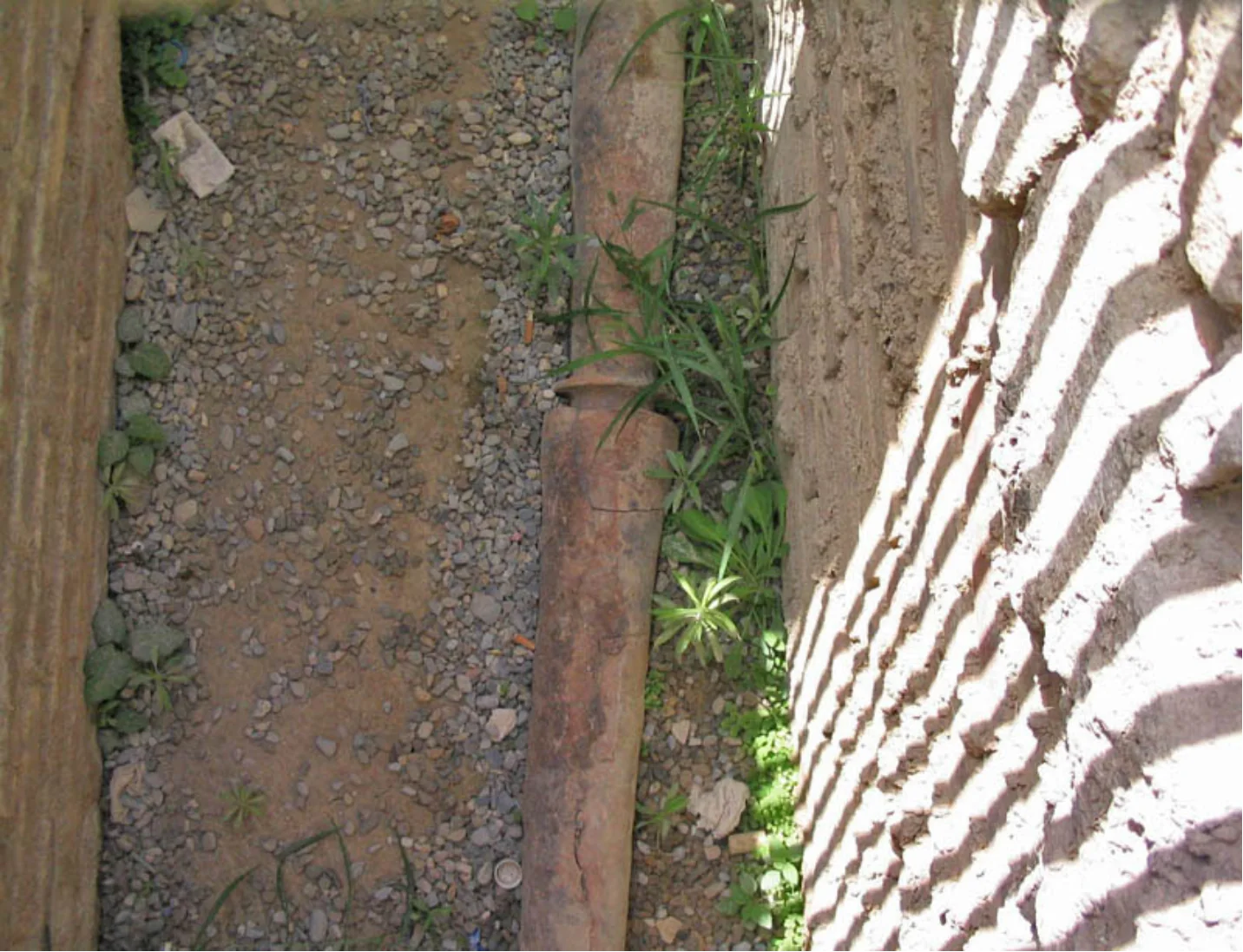
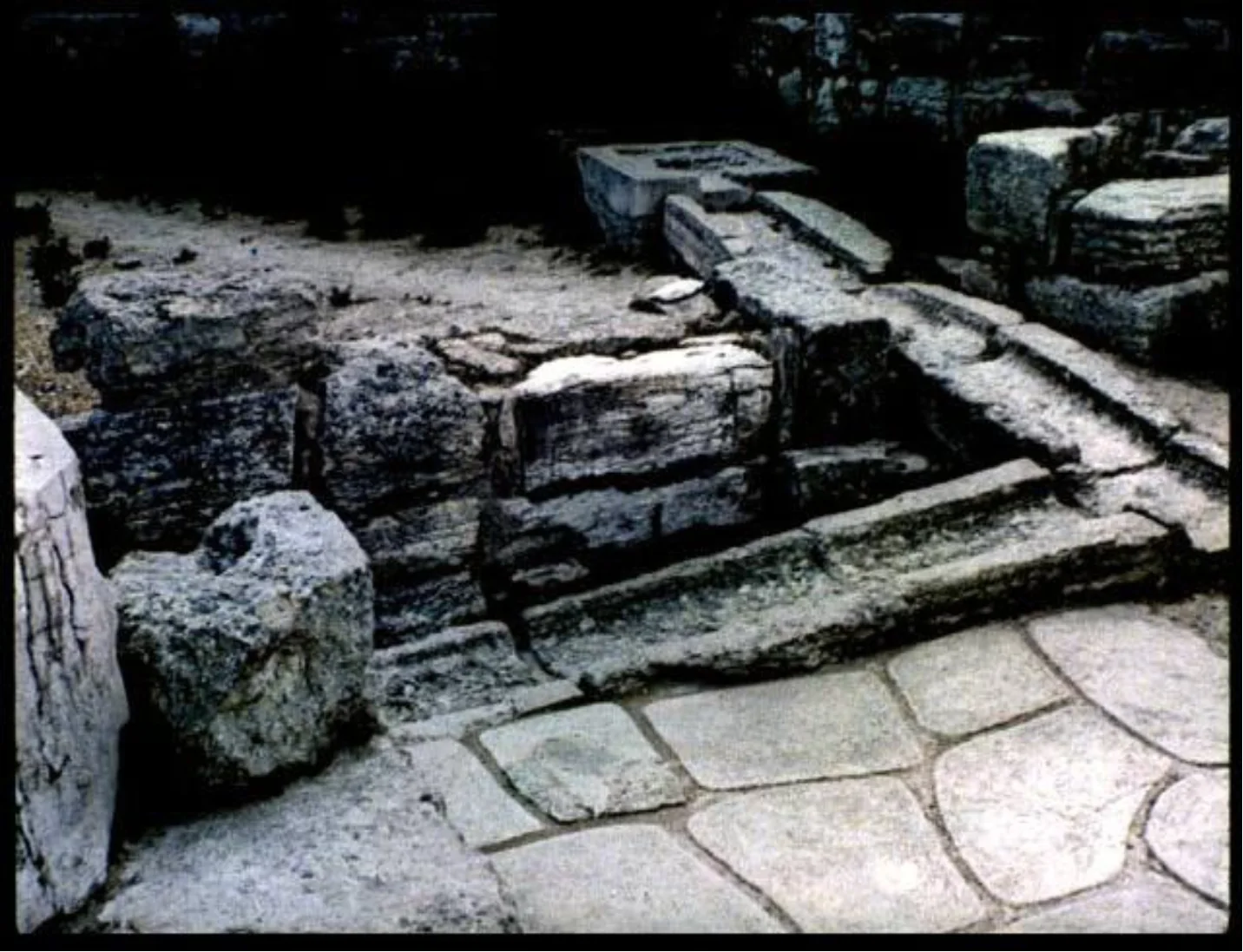
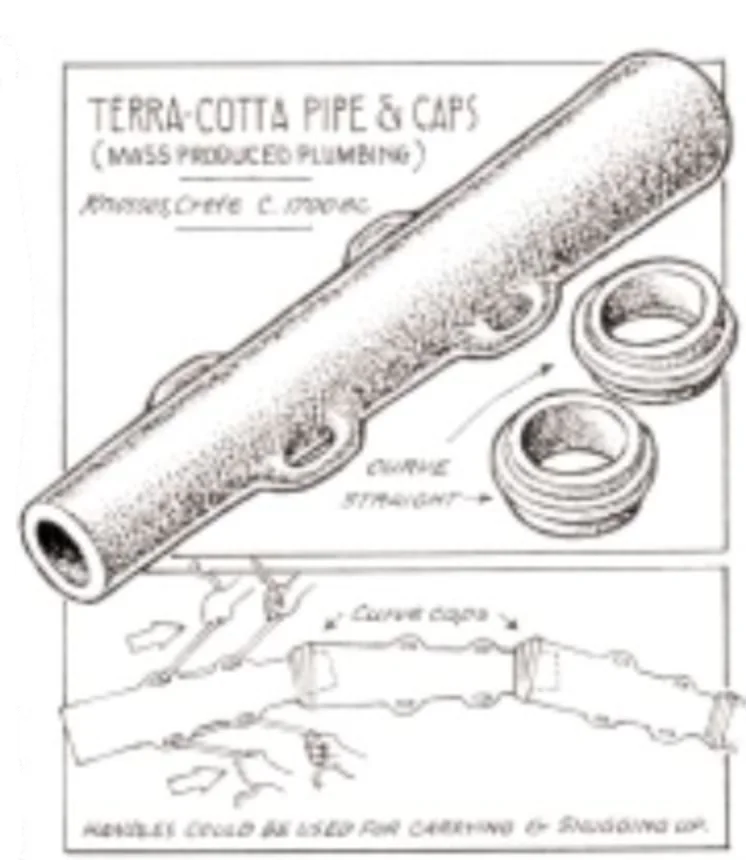
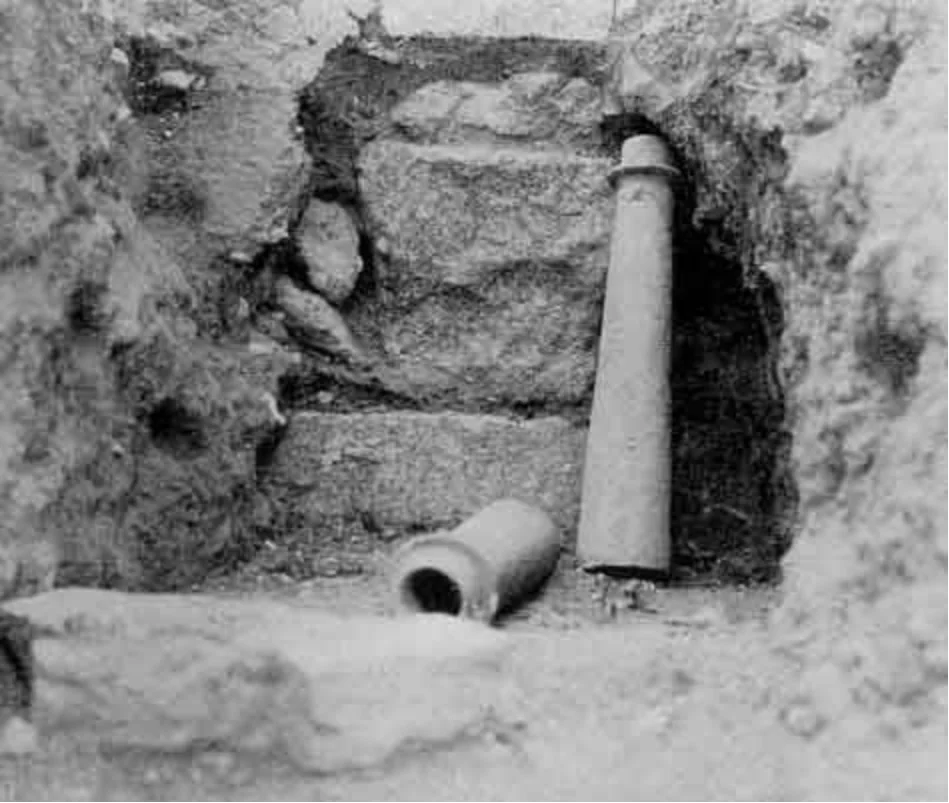
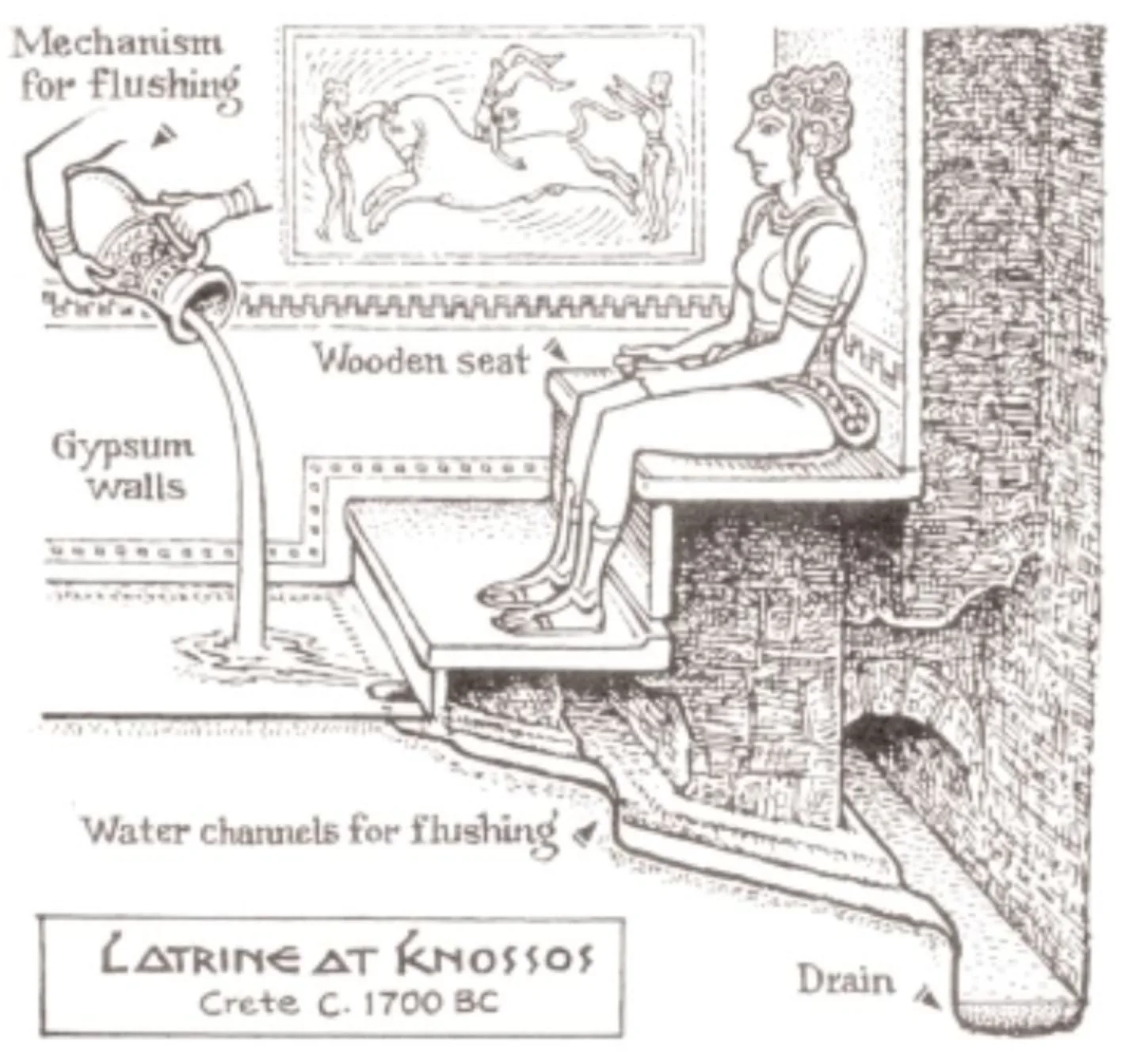
The First Flush Toilet
The First Flush Toilet

Next
Next
Back
Back
Menu
Menu
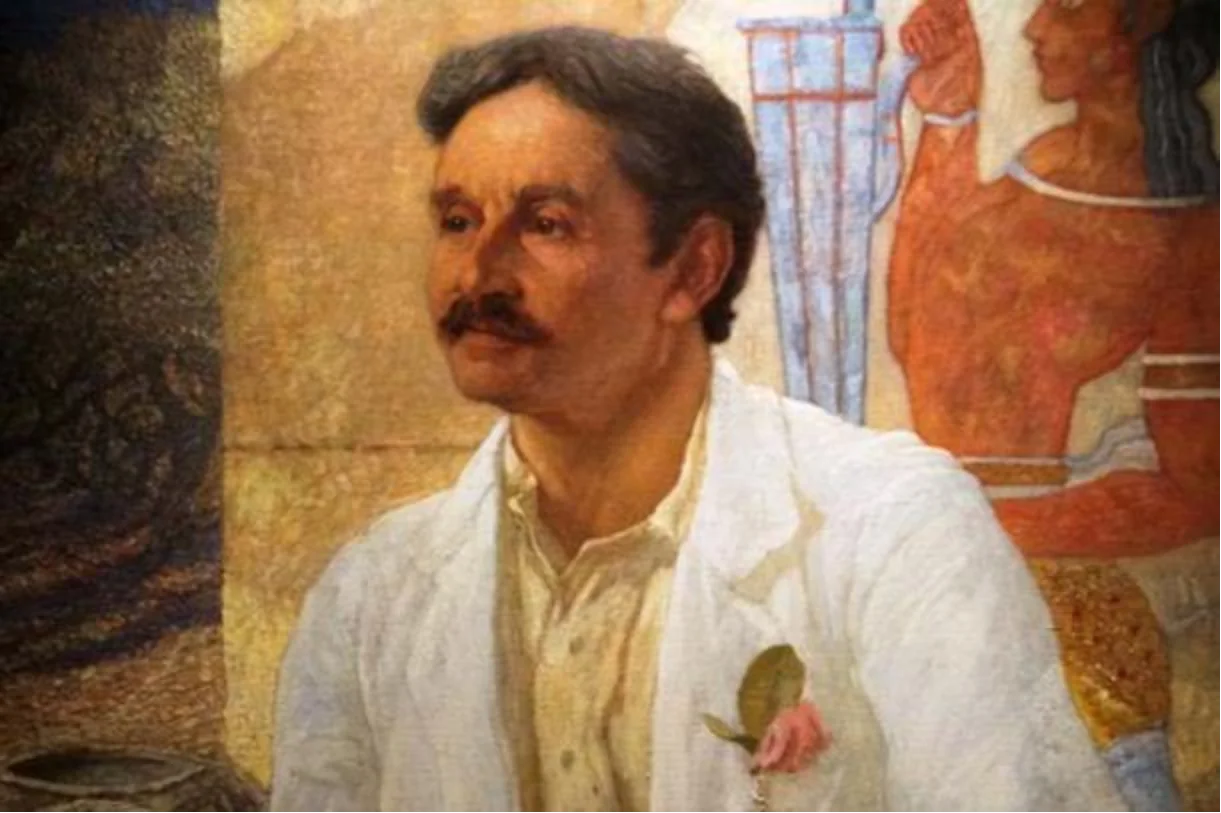






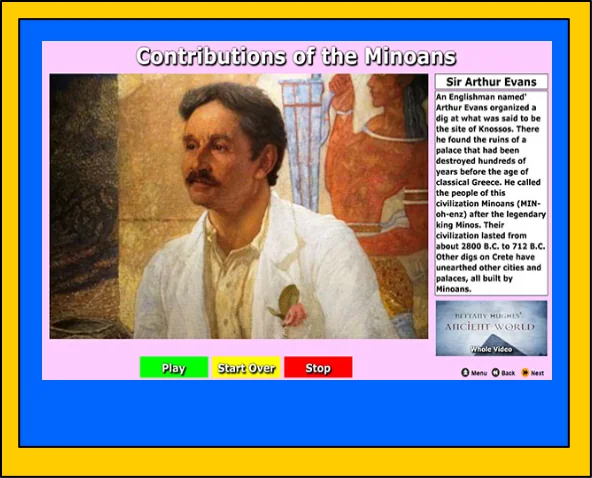
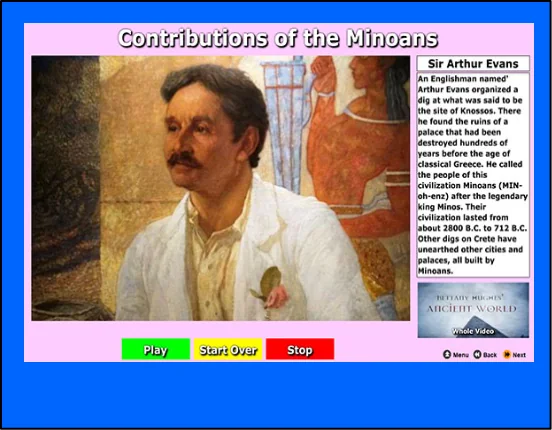
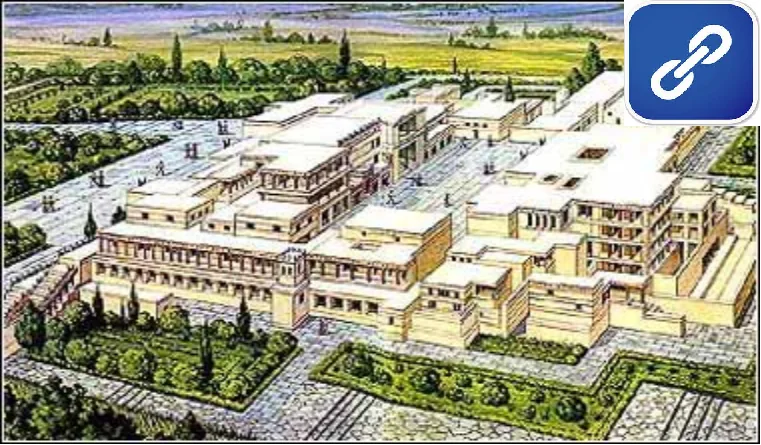
An Englishman named' Arthur Evans organized a dig at what was said to be the site of Knossos. There he found the ruins of a palace that had been destroyed hundreds of years before the age of classical Greece. He called the people of this civilization Minoans (MIN-oh-enz) after the legendary king Minos. Their civilization lasted from about 2800 B.C. to 712 B.C. Other digs on Crete have unearthed other cities and palaces, all built by Minoans.
Sir Arthur Evans


Next
Next
Back
Back
Menu
Menu


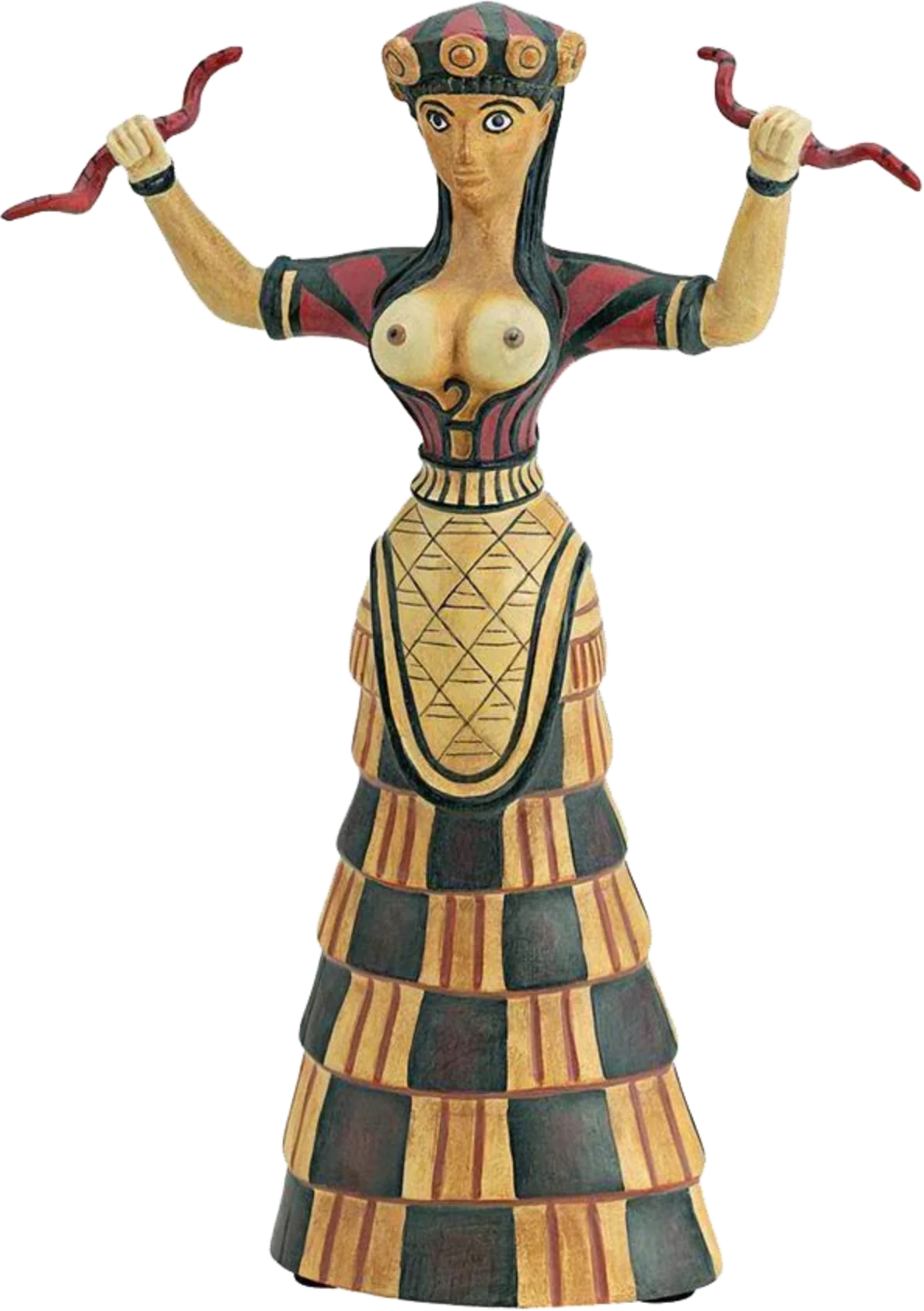
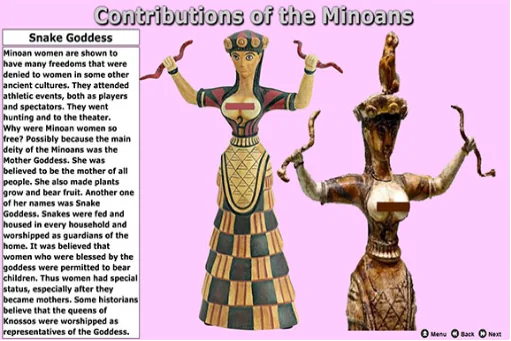
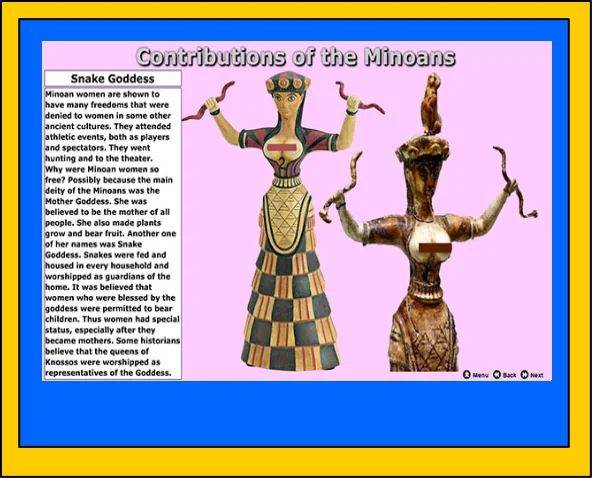
Minoan women are shown to have many freedoms that were denied to women in some other ancient cultures. They attended athletic events, both as players and spectators. They went hunting and to the theater.
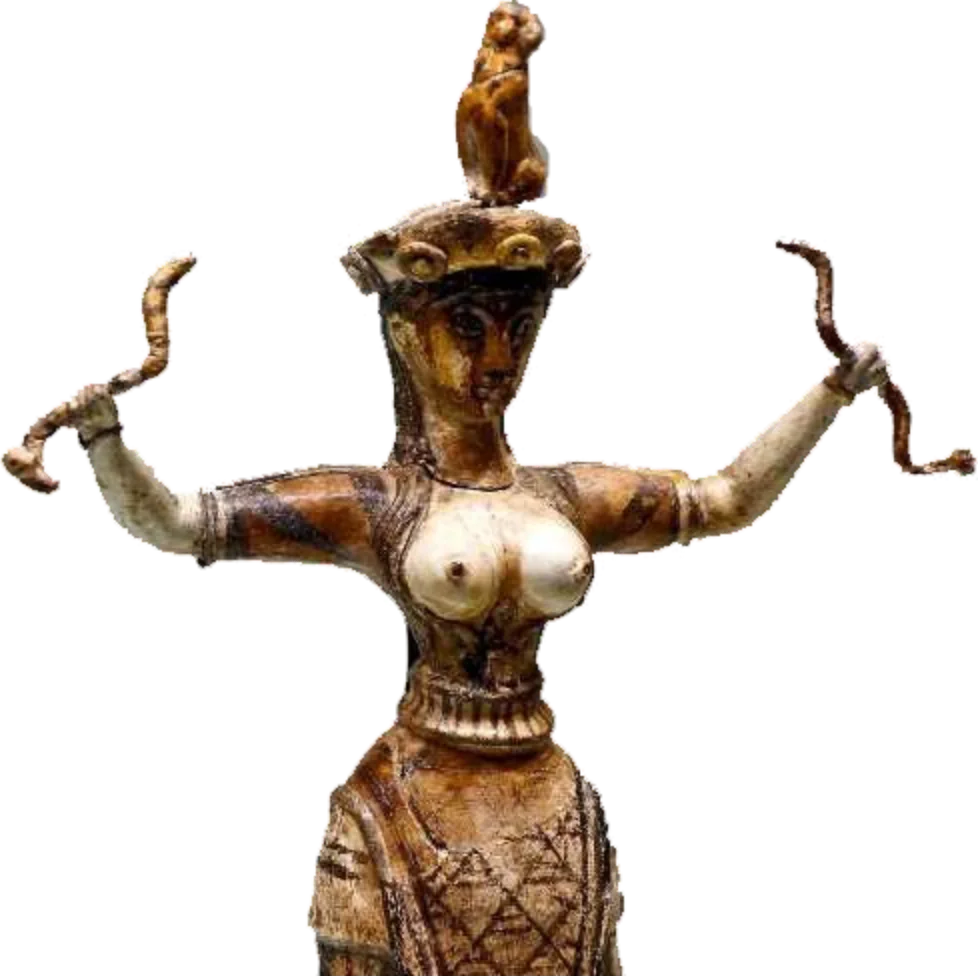
Why were Minoan women so free? Possibly because the main deity of the Minoans was the Mother Goddess. She was believed to be the mother of all people. She also made plants grow and bear fruit. Another one of her names was Snake Goddess. Snakes were fed and housed in every household and worshipped as guardians of the home. It was believed that women who were blessed by the goddess were permitted to bear children. Thus women had special status, especially after they became mothers. Some historians believe that the queens of Knossos were worshipped as representatives of the Goddess.
Why were Minoan women so free? Possibly because the main deity of the Minoans was the Mother Goddess. She was believed to be the mother of all people. She also made plants grow and bear fruit. Another one of her names was Snake Goddess. Snakes were fed and housed in every household and worshipped as guardians of the home. It was believed that women who were blessed by the goddess were permitted to bear children. Thus women had special status, especially after they became mothers. Some historians believe that the queens of Knossos were worshipped as representatives of the Goddess.
Snake Goddess
Next
Next
Back
Back
Menu
Menu

Play

Stop

Rewind

Present Day Leapers

Somersault
Next
Next
Back
Back
Menu
Menu
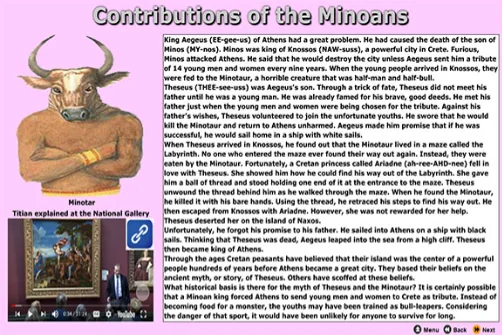
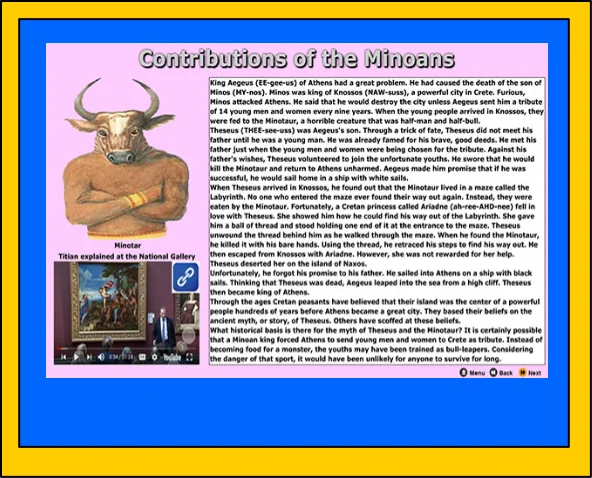
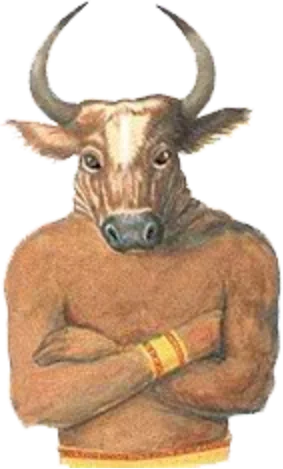
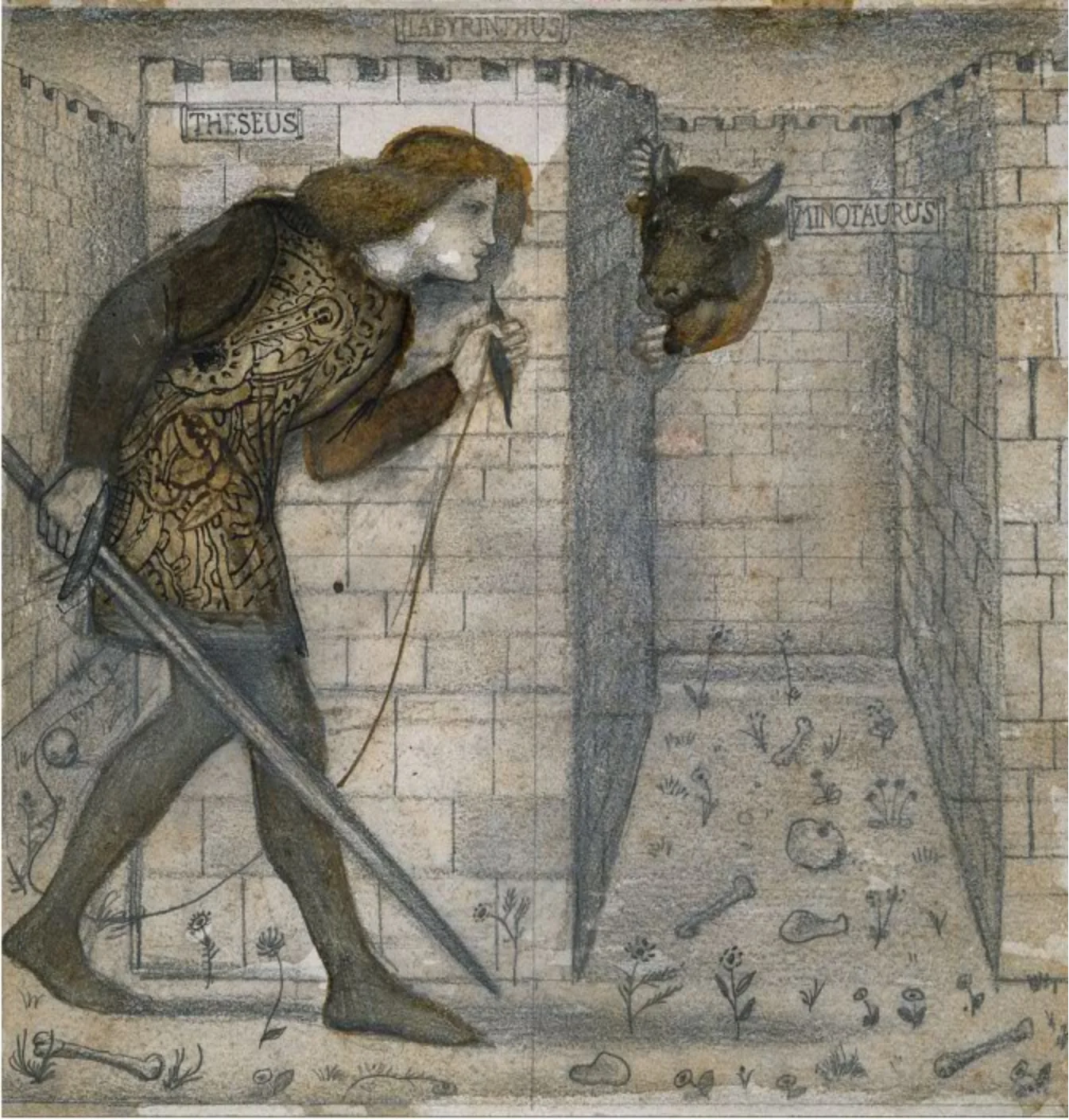
King Aegeus (EE-gee-us) of Athens had a great problem. He had caused the death of the son of Minos (MY-nos). Minos was king of Knossos (NAW-suss), a powerful city in Crete. Furious, Minos attacked Athens. He said that he would destroy the city unless Aegeus sent him a tribute of 14 young men and women every nine years. When the young people arrived in Knossos, they were fed to the Minotaur, a horrible creature that was half-man and half-bull.
Theseus (THEE-see-uss) was Aegeus's son. Through a trick of fate, Theseus did not meet his father until he was a young man. He was already famed for his brave, good deeds. He met his father just when the young men and women were being chosen for the tribute. Against his father's wishes, Theseus volunteered to join the unfortunate youths. He swore that he would kill the Minotaur and return to Athens unharmed. Aegeus made him promise that if he was successful, he would sail home in a ship with white sails.
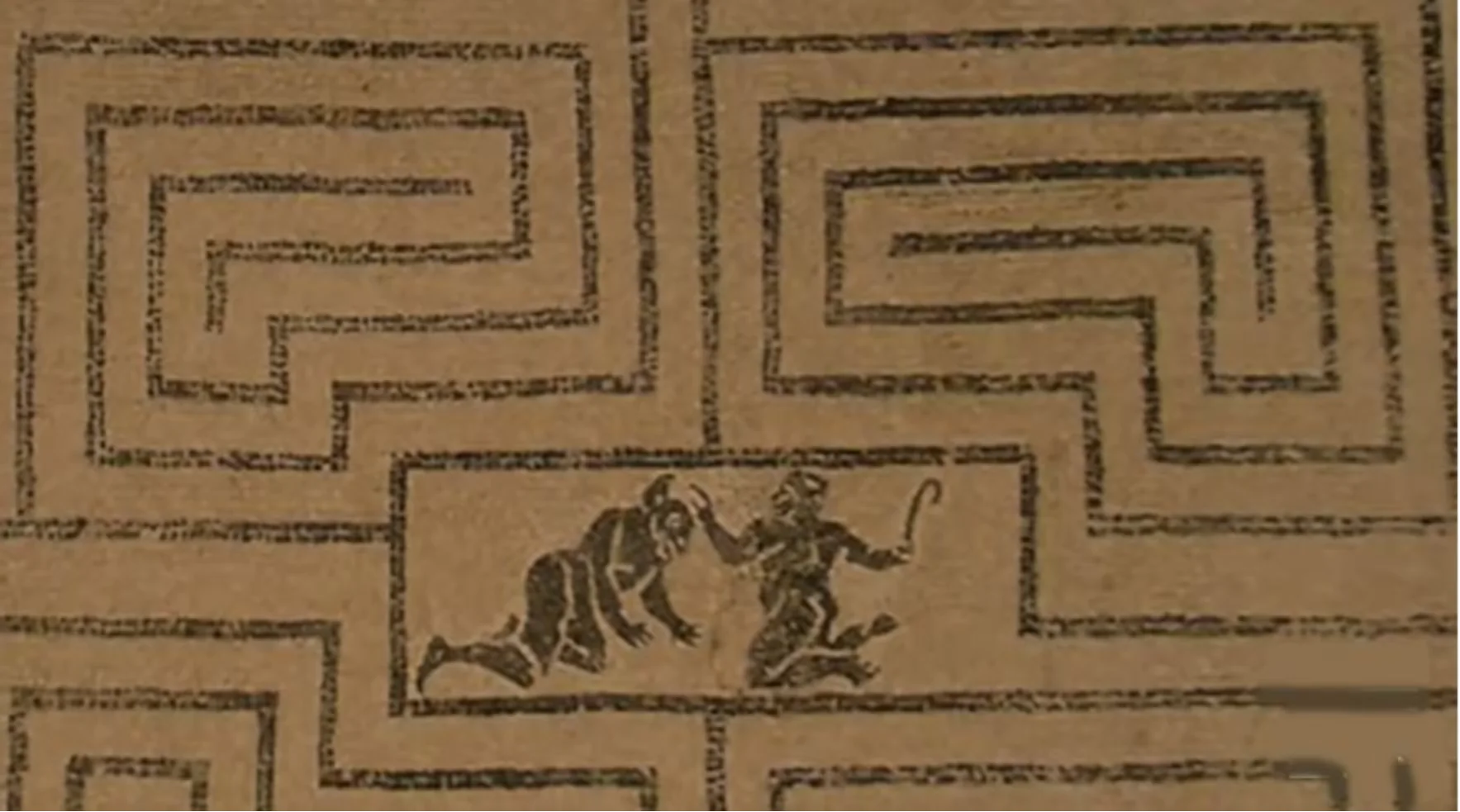
When Theseus arrived in Knossos, he found out that the Minotaur lived in a maze called the Labyrinth. No one who entered the maze ever found their way out again. Instead, they were eaten by the Minotaur. Fortunately, a Cretan princess called Ariadne (ah-ree-AHD-nee) fell in love with Theseus. She showed him how he could find his way out of the Labyrinth. She gave him a ball of thread and stood holding one end of it at the entrance to the maze. Theseus unwound the thread behind him as he walked through the maze. When he found the Minotaur, he killed it with his bare hands. Using the thread, he retraced his steps to find his way out. He then escaped from Knossos with Ariadne. However, she was not rewarded for her help. Theseus deserted her on the island of Naxos.
Unfortunately, he forgot his promise to his father. He sailed into Athens on a ship with black sails. Thinking that Theseus was dead, Aegeus leaped into the sea from a high cliff. Theseus then became king of Athens.
Through the ages Cretan peasants have believed that their island was the center of a powerful people hundreds of years before Athens became a great city. They based their beliefs on the ancient myth, or story, of Theseus. Others have scoffed at these beliefs.
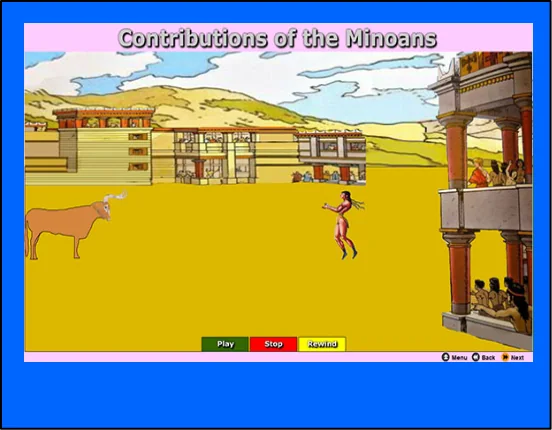
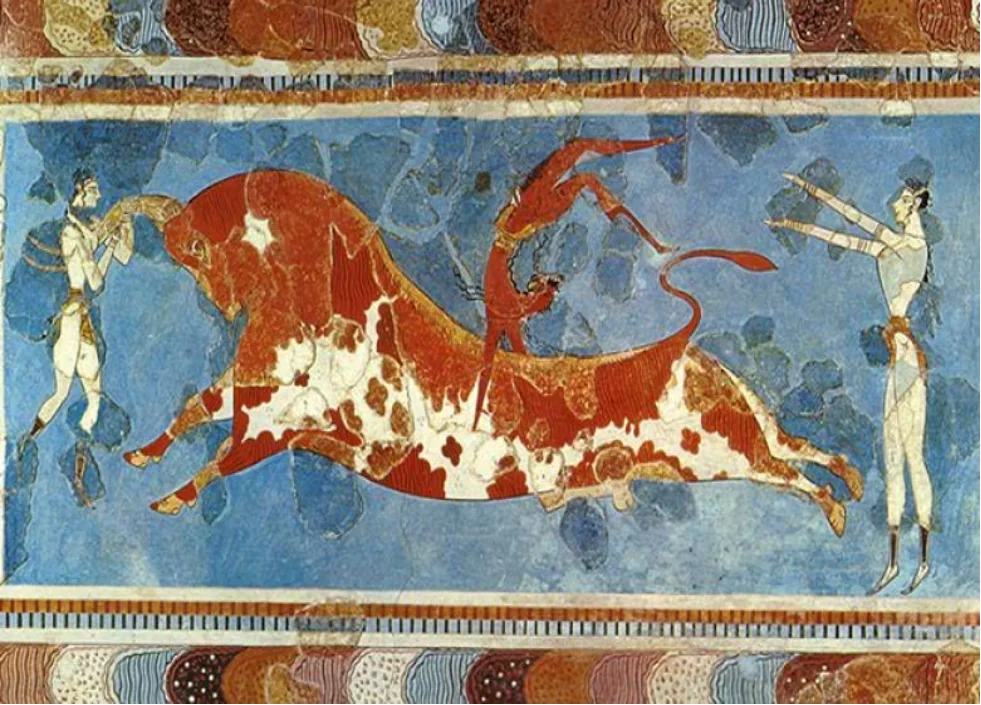
What historical basis is there for the myth of Theseus and the Minotaur? It is certainly possible that a Minoan king forced Athens to send young men and women to Crete as tribute. Instead of becoming food for a monster, the youths may have been trained as bull-leapers. Considering the danger of that sport, it would have been unlikely for anyone to survive for long.
Theseus (THEE-see-uss) was Aegeus's son. Through a trick of fate, Theseus did not meet his father until he was a young man. He was already famed for his brave, good deeds. He met his father just when the young men and women were being chosen for the tribute. Against his father's wishes, Theseus volunteered to join the unfortunate youths. He swore that he would kill the Minotaur and return to Athens unharmed. Aegeus made him promise that if he was successful, he would sail home in a ship with white sails.
When Theseus arrived in Knossos, he found out that the Minotaur lived in a maze called the Labyrinth. No one who entered the maze ever found their way out again. Instead, they were eaten by the Minotaur. Fortunately, a Cretan princess called Ariadne (ah-ree-AHD-nee) fell in love with Theseus. She showed him how he could find his way out of the Labyrinth. She gave him a ball of thread and stood holding one end of it at the entrance to the maze. Theseus unwound the thread behind him as he walked through the maze. When he found the Minotaur, he killed it with his bare hands. Using the thread, he retraced his steps to find his way out. He then escaped from Knossos with Ariadne. However, she was not rewarded for her help. Theseus deserted her on the island of Naxos.
Unfortunately, he forgot his promise to his father. He sailed into Athens on a ship with black sails. Thinking that Theseus was dead, Aegeus leaped into the sea from a high cliff. Theseus then became king of Athens.
Through the ages Cretan peasants have believed that their island was the center of a powerful people hundreds of years before Athens became a great city. They based their beliefs on the ancient myth, or story, of Theseus. Others have scoffed at these beliefs.
What historical basis is there for the myth of Theseus and the Minotaur? It is certainly possible that a Minoan king forced Athens to send young men and women to Crete as tribute. Instead of becoming food for a monster, the youths may have been trained as bull-leapers. Considering the danger of that sport, it would have been unlikely for anyone to survive for long.



Next
Next
Back
Back
Menu
Menu
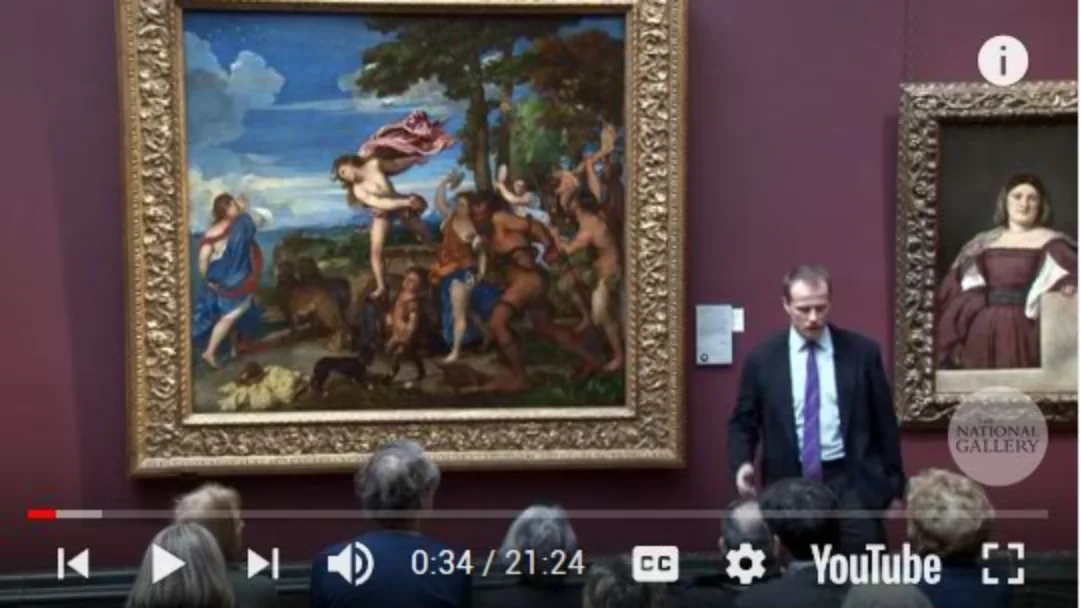
"Theseus and the Minotaur" was created by Jim Henson (creator of The Muppets) and developed by Anthony Minghella. It originally aired in 1988. You can find it at https://www.awesomestories.com/Login
We found other free videos to replace them.
Click the buttons below to open your browser to watch Theseus and the Minotaur.











Next
Next
Back
Back
Menu
Menu


The wine bearer is the character who carries a cask of wine on his shoulder. He is like Atlas who is condemned to carry the world on his back.

This maenad gives a longing glance to the satyr. This helps reinforce the main theme of the painting.


It's a ding moment. This maenad clashes her cymbals together.


Bacchus' charoit was pulled by leopards in myth but here Titian is using cheetahs. Even the glances of the cheetahs shows the glance of becoming future lovers.



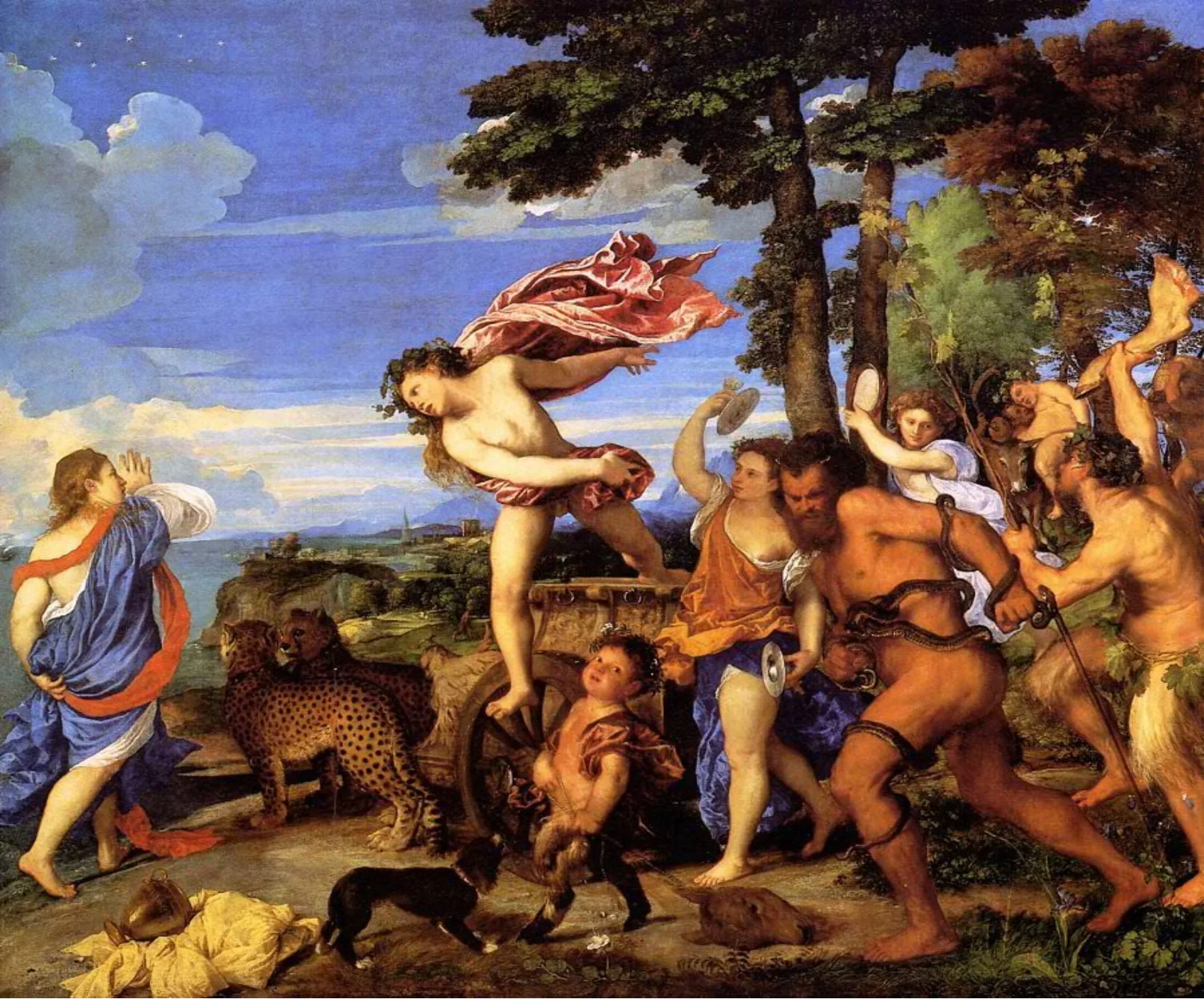
Bacchus (Dionysus) is the Greek and Roman god of wine and the giver of ecstasy. He is dressed in a cloak of pink, while Ariadne has a sash of red to form a link which causes the eye to cross backward and forward between them. He is always young and recognizable by the laurel and grape leaves in his hair. Bacchus also falls in love with Ariadne at first sight.


Bacchus has taken the crown of Ariadne and tossed it in the sky making it a constellation.


This is the ship of Theseus leaving Ariande


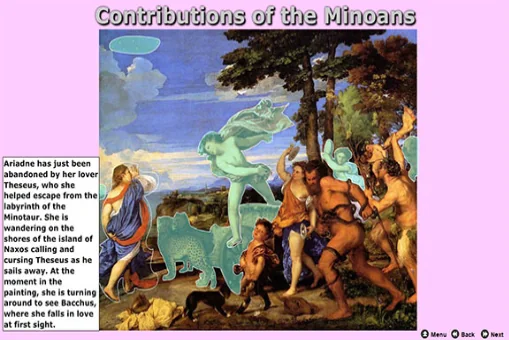
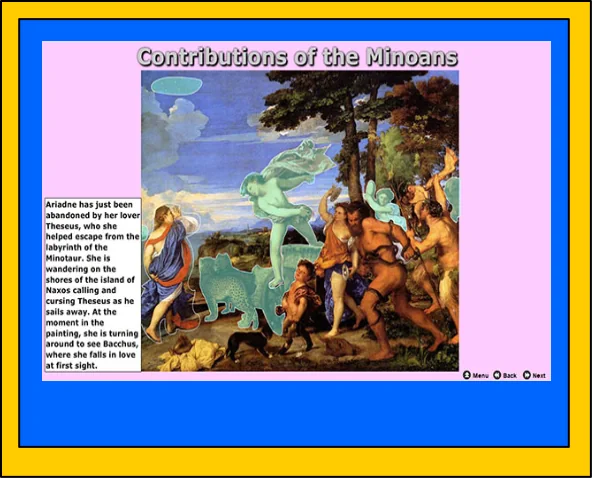
Ariadne has just been abandoned by her lover Theseus, who she helped escape from the labyrinth of the Minotaur. She is wandering on the shores of the island of Naxos calling and cursing Theseus as he sails away. At the moment in the painting, she is turning around to see Bacchus, where she falls in love at first sight.


An infant satyr invites us to join in the gruesome aspects of the Bacchic ritual by draging a raw fresh calf head



The caper flower is a symbol of love.

This muscular figure wrestling the snakes is a Trojan priest who was killed by sea serpents. The statue was rediscovered in 1506.


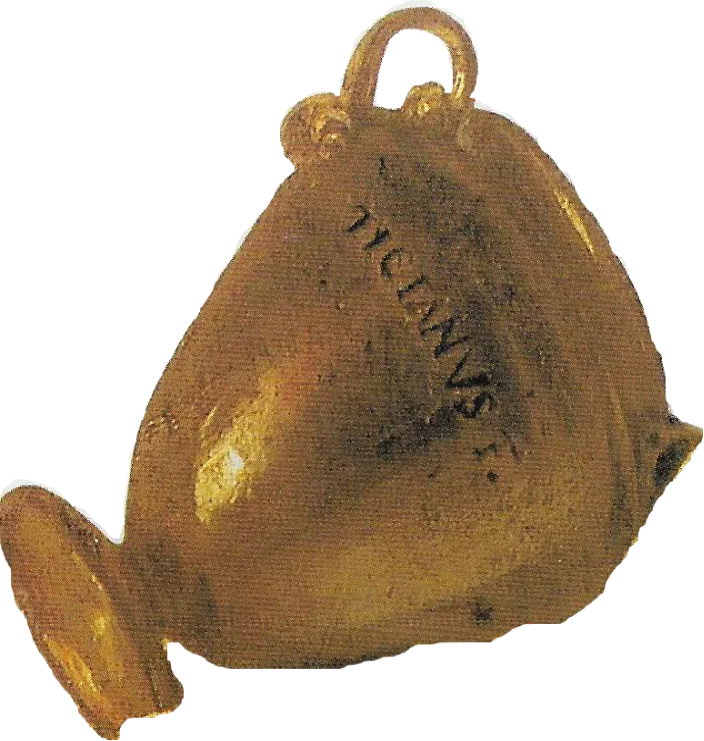
Titian has put his signature on the urn in Latin. "TICIANUS F(ecit)" meaning Titian made this picture.
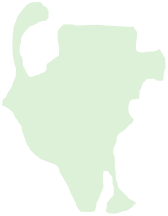
One maenad blows a horn while Silenus, the old fat man rides a donkey. Silenus is the foster father of Bacchus and chief of the satyrs.


This ecstatic satyr has crown of grape leaves on his head while he waves the leg of a calf above his head. In his left hand he carries a staff entwined with grape leaves.
This ecstatic satyr has crown of grape leaves on his head while he waves the leg of a calf above his head. In his left hand he carries a staff entwined with grape leaves.
Directions:
Mouse over each bubble for more information
Mouse over each bubble for more information
Bacchus and Ariadne
Titian has painted the electrifying moment when Ariadne. daughter of King Minos of Crete, meets Bacchus, the god of wine. It's love at first sight for both.
Titian has painted the electrifying moment when Ariadne. daughter of King Minos of Crete, meets Bacchus, the god of wine. It's love at first sight for both.

A little dog is barking at the magical moment. Little details like the dog were typical of Titian.
Next
Next
Back
Back
Menu
Menu
Across
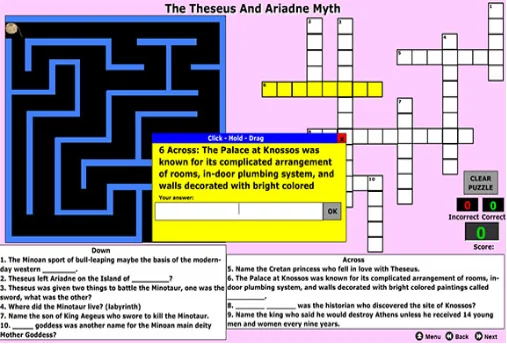
5. Name the Cretan princess who fell in love with Theseus.
6. The Palace at Knossos was known for its complicated arrangement of rooms, in-door plumbing system, and walls decorated with bright colored paintings called _________.
8. _______ _______ was the historian who discovered the site of Knossos?
9. Name the king who said he would destroy Athens unless he received 14 young men and women every nine years.
5. Name the Cretan princess who fell in love with Theseus.
6. The Palace at Knossos was known for its complicated arrangement of rooms, in-door plumbing system, and walls decorated with bright colored paintings called _________.
8. _______ _______ was the historian who discovered the site of Knossos?
9. Name the king who said he would destroy Athens unless he received 14 young men and women every nine years.
Down
1. The Minoan sport of bull-leaping maybe the basis of the modern-day western ________.
2. Theseus left Ariadne on the Island of _________?
3. Theseus was given two things to battle the Minotaur, one was the sword, what was the other?
4. Where did the Minotaur live? (labyrinth)
7. Name the son of King Aegeus who swore to kill the Minotaur.
10. _____ goddess was another name for the Minoan main deity Mother Goddess?
1. The Minoan sport of bull-leaping maybe the basis of the modern-day western ________.
2. Theseus left Ariadne on the Island of _________?
3. Theseus was given two things to battle the Minotaur, one was the sword, what was the other?
4. Where did the Minotaur live? (labyrinth)
7. Name the son of King Aegeus who swore to kill the Minotaur.
10. _____ goddess was another name for the Minoan main deity Mother Goddess?
The Theseus And Ariadne Myth
Directions: Click the numbered squares for clues.




0

0

0

CLEAR


OK

x
Click - Hold - Drag
Your answer:
Next
Next
Back
Back
Menu
Menu
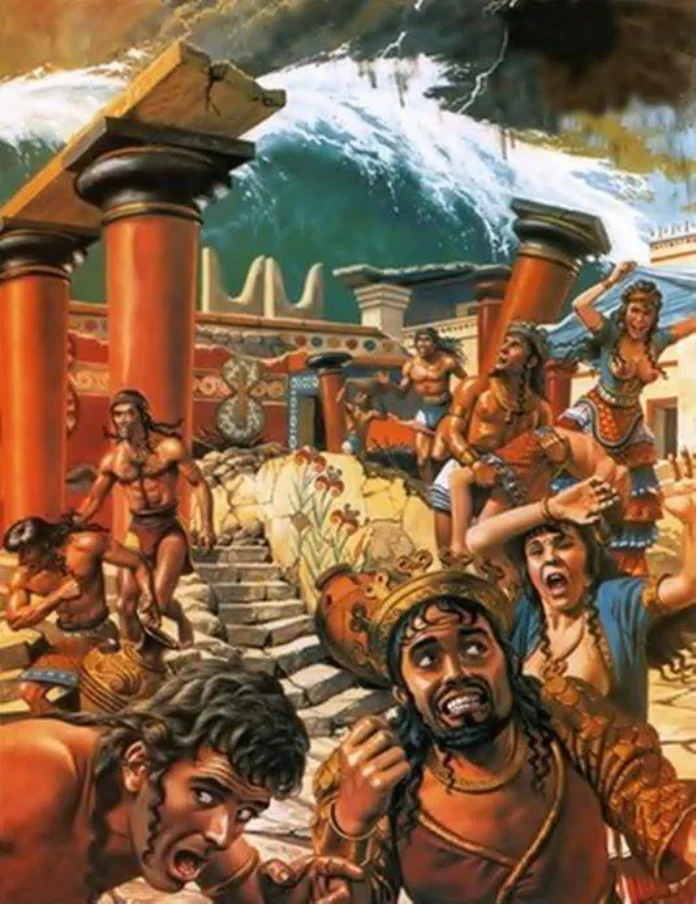
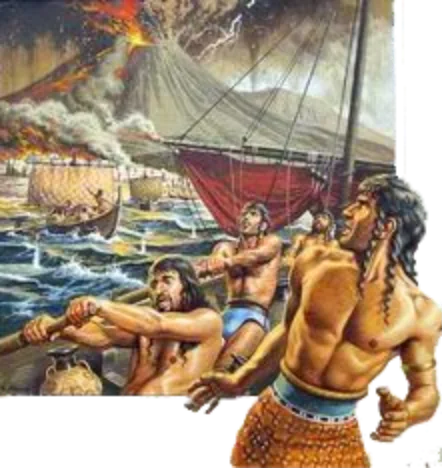
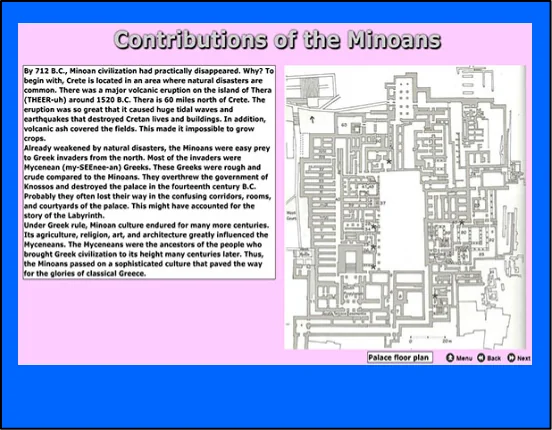
By 712 B.C., Minoan civilization had practically disappeared. Why? To begin with, Crete is located in an area where natural disasters are common. There was a major volcanic eruption on the island of Thera (THEER-uh) around 1520 B.C. Thera is 60 miles north of Crete. The eruption was so great that it caused huge tidal waves and earthquakes that destroyed Cretan lives and buildings. In addition, volcanic ash covered the fields. This made it impossible to grow crops.
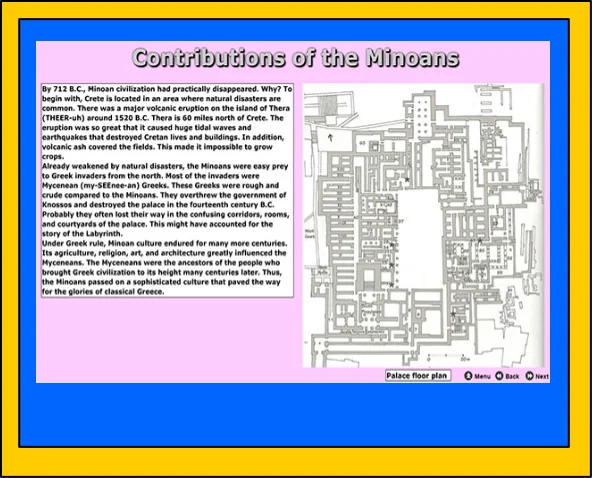
Already weakened by natural disasters, the Minoans were easy prey to Greek invaders from the north. Most of the invaders were Mycenean (my-SEEnee-an) Greeks. These Greeks were rough and crude compared to the Minoans. They overthrew the government of Knossos and destroyed the palace in the fourteenth century B.C. Probably they often lost their way in the confusing corridors, rooms, and courtyards of the palace. This might have accounted for the story of the Labyrinth.
Under Greek rule, Minoan culture endured for many more centuries. Its agriculture, religion, art, and architecture greatly influenced the Myceneans. The Myceneans were the ancestors of the people who brought Greek civilization to its height many centuries later. Thus, the Minoans passed on a sophisticated culture that paved the way for the glories of classical Greece.
Already weakened by natural disasters, the Minoans were easy prey to Greek invaders from the north. Most of the invaders were Mycenean (my-SEEnee-an) Greeks. These Greeks were rough and crude compared to the Minoans. They overthrew the government of Knossos and destroyed the palace in the fourteenth century B.C. Probably they often lost their way in the confusing corridors, rooms, and courtyards of the palace. This might have accounted for the story of the Labyrinth.
Under Greek rule, Minoan culture endured for many more centuries. Its agriculture, religion, art, and architecture greatly influenced the Myceneans. The Myceneans were the ancestors of the people who brought Greek civilization to its height many centuries later. Thus, the Minoans passed on a sophisticated culture that paved the way for the glories of classical Greece.
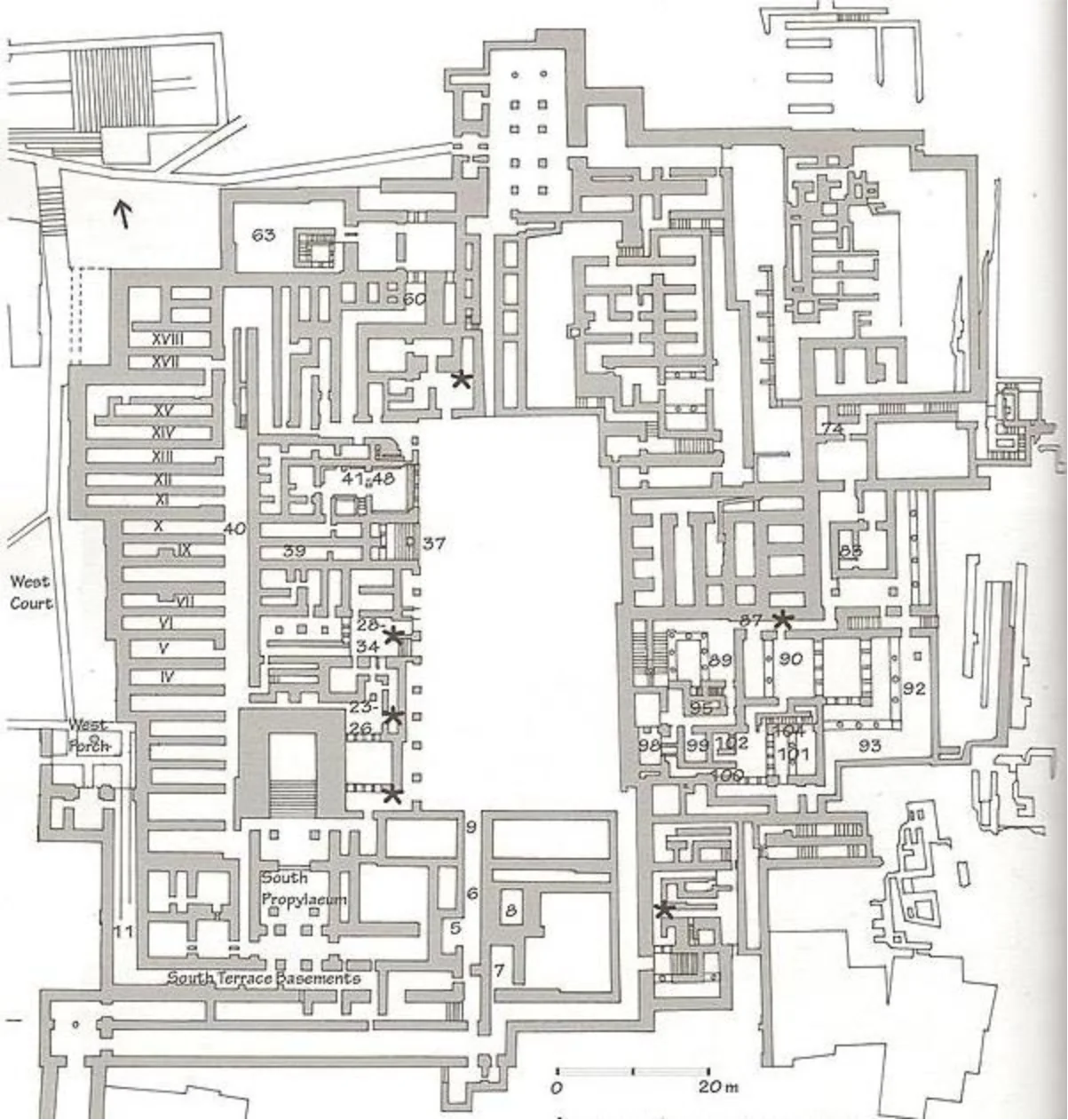
Palace floor plan
Back
Back
Menu
Menu
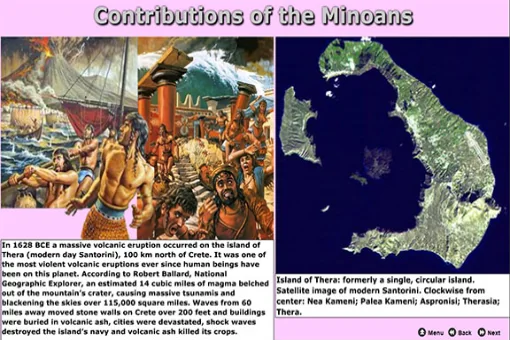
In 1628 BCE a massive volcanic eruption occurred on the island of Thera (modern day Santorini), 100 km north of Crete. It was one of the most violent volcanic eruptions ever since human beings have been on this planet. According to Robert Ballard, National Geographic Explorer, an estimated 14 cubic miles of magma belched out of the mountain’s crater, causing massive tsunamis and blackening the skies over 115,000 square miles. Waves from 60 miles away moved stone walls on Crete over 200 feet and buildings were buried in volcanic ash, cities were devastated, shock waves destroyed the island’s navy and volcanic ash killed its crops.
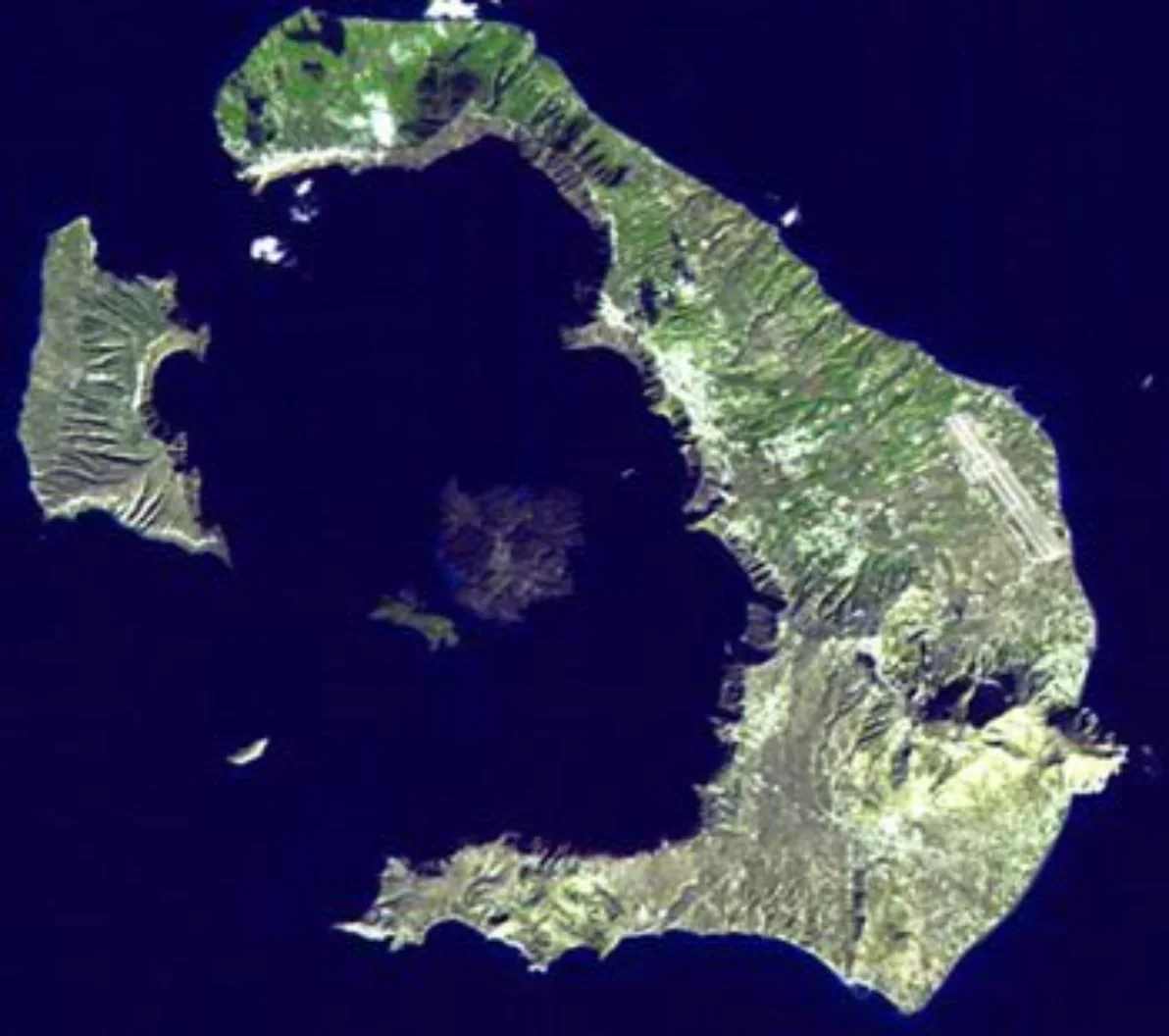
Island of Thera: formerly a single, circular island. Satellite image of modern Santorini. Clockwise from center: Nea Kameni; Palea Kameni; Aspronisi; Therasia; Thera.