Socrates championed the use of reason. He thought that individuals should be guided by reason alone in their search for knowledge and truth. We know what we know of Socrates from his student, Plato. Socrates encouraged his students to examine their beliefs. He is believed to have said that the unexamined life was not worth living. Socrates developed a conversational question-and-answer technique that is known as the Socratic Method. He would ask his students to answer questions and insisted that they answer clearly. The Socratic Method was designed to make people examine their beliefs using reason. The search for truth using reason alarmed many Athenians since they had suffered from Sparta in the Peloponnesian Wars. Looking for a scapegoat, they saw Socrates as a dangerous troublemaker. The authorities accused Socrates of failing to honor the gods and for corrupting the youth of Athens with his teachings. Socrates could have gone into exile, but he chose to stand trial and was condemned to death by an Athenian jury. He took the death penalty, maintaining that a citizen should obey the laws of the state. "Above all," he told the Athenian jury, "I shall be able to continue my search into true and false knowledge; as in this world so also in that, I shall find out who is wise, and who pretends to be wise and is not."
Greek Philosophers
The Greeks called persons seeking truth philosophers, which means "lovers of wisdom." Greek thinkers based their philosophy on two thoughts. 1. The universe is arranged in an orderly way, and subject to absolute and unchanging laws. 2. People understand these laws through logic and reason. One group of philosophers were called the Sophists. This group questioned people's unexamined beliefs and ideas about justice and other traditional values. One of the most famous Sophists was Protagoras, who questioned the existence of the Greek gods. Along with his other ideas about man, Protagoras was considered dangerous. Socrates was one of the critics of the Sophists.
Philosophers try to uncover our basic assumptions, evaluate our reasons (if any) for these assumptions, and speculate on what our world view would be like if we gave up those assumptions. This process can be liberating and fascinating, even when (or maybe because) it leads to results that seem hard to believe. This brings us to the 1998 song Wear Sunscreen, an essay titled "Advice, like youth, probably just wasted on the young" written by Mary Schmich and published in the Chicago Tribune as a column in 1997. Its subject and tone are similar to the 1927 poem "Desiderata". The most popular and well-known form of the essay is the successful music single "Everybody's Free (To Wear Sunscreen)", released in 1998, by Baz Luhrmann. On the next page click the play button to hear this advice, or one person's way life should be lived.
Greek Philosophers
"Everybody's Free (To Wear Sunscreen)" – Baz Luhrmann, 1998 · from Mary Schmich's 1997 Chicago Tribune column
Greek Philosophers
Socrates – 470-399 B.C.
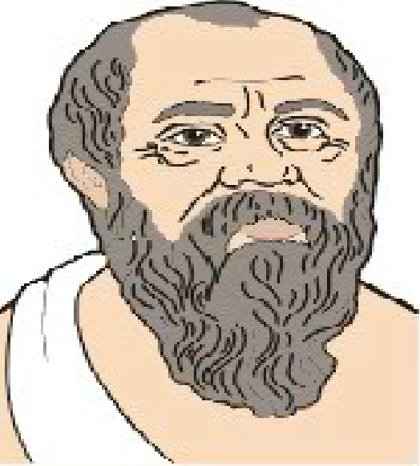 Socrates
Greek Philosophers
Socrates – 470-399 B.C.
PBS Empires – The Greeks: Crucible of Civilization – Atlantic Productions – 1999
Greek Philosophers
Plato – 427-347 BC
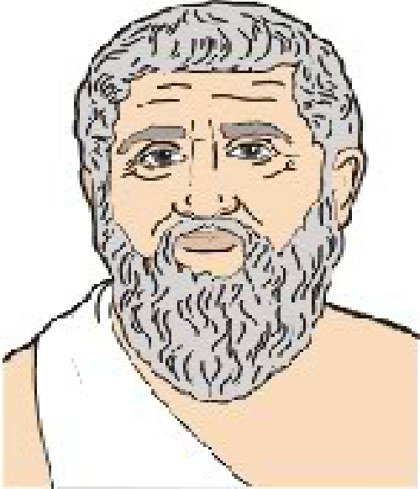 Plato
Plato was 28 years old when Socrates died. He left Athens for ten years and returned to set up a school called the Academy. At the Academy, Plato taught science, mathematics, and philosophy. Most of Plato's students were men, although a few women were allowed to attend. Plato examined issues like Socrates, such as the rights and responsibilities of being a citizen, the nature of truth and beauty, and the meaning of justice. Plato's works are written in the form of dialogues or conversations, where different speakers express their opinions and views. In his Republic, Plato explains his concept of the ideal state. The ideal state should be based on the ideal of justice – the satisfaction of the common good. It should have three classes: workers to produce basic necessities, soldiers to defend the state, and philosophers to govern in the public interest. In his ideal state Plato also included some controversial ideas such as abolishing the family and private property because they led to selfishness. Plato also discusses the idea of the cave, which we will look at in the next video.
Greek Philosophers
Plato – 427-347 BC
The Allegory of the Cave – Discovery School
Greek Philosophers
Aristotle – 384-322 BC
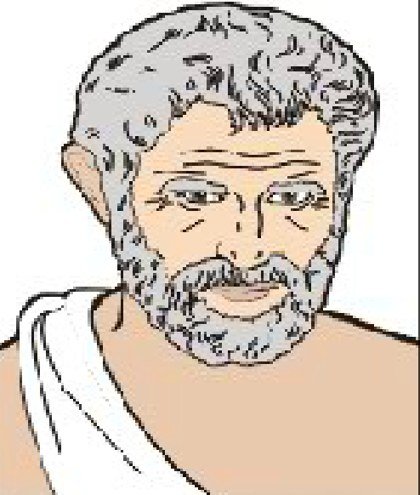 Aristotle
The most brilliant student at the Academy was Aristotle. After the death of Plato, Aristotle left the Academy and ultimately the King of Macedonia invited him to come and teach his son Alexander. When Alexander inherited the kingdom of Macedonia he gave Aristotle a generous gift of money. Aristotle used the money to establish a new school in Athens called the Lyceum.
The Lyceum became the world's first scientific establishment where Aristotle investigated dozens of subjects ranging from biology to philosophy to the arts. In each subject, his ideas have swayed thinking from the ancient Greeks all the way to present day. In his teaching, he taught that students should use moderation in all things. Aristotle also taught that virtue, or moral behavior, was a balance between the two extremes. He admired the virtues of self-reliance and self-control.
Aristotle's ideas on government differed from Plato's. For example, he appreciated family life and property. During Aristotle's day, Athenian democracy had become dishonest. As a result, Aristotle assumed that the best government was a mixture of monarchy, aristocracy, and democracy. An enlightened king should govern with the help of an educated aristocracy and with a popular assembly that respected the rule of law.
Meet his most famous student → Alexander the GreatGreek Philosophers
Aristotle – 384-322 BC
PBS Empires – The Greeks: Crucible of Civilization – Atlantic Productions – 1999
Wheel of Greek Philosophers Game
Score Board
You will reset the game by clicking the Reset button or click the Close button to continue with the current game
Greek Philosophers Match Game
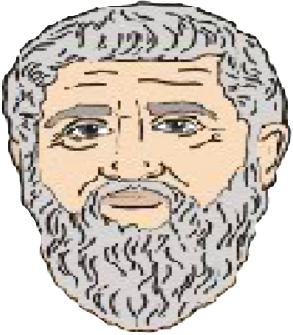
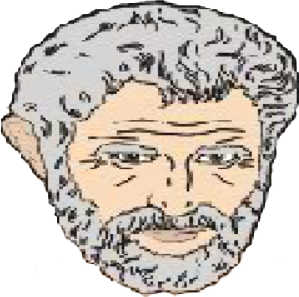
GAME OVER
Congratulations, you've matched each Greek Philosopher to his correct philosophy.